
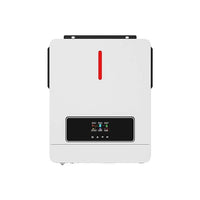
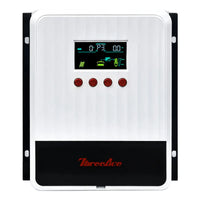


● MPPT Controller + High Conversion Inverter
● Pure sine wave solar inverter (on/off grid)
● Multi-protection
● Dual communication ports for battery communication and Wifi communication
● Intelligent battery charging design to optimize battery life
GRID-TIE OPERATION
Nominal DC Voltage / Maximum DC Voltage:
360/500VDC
Start-up Voltage / Initial Feeding Voltage:
60VDC/90VDC
MPPT Voltage Range:
60-450VDC
Maximum Input Current:
1/18A | 1/22A
Nominal Output Voltage:
220/230/240VAC
Output Voltage Range:
195-253VAC
Nominal Output Current:
15.7A | 18.2A | 27.0A
Power Factor:
>0.99
Maximum Conversion Efficiency (DC/AC):
98%
Full Load:
3600W | 4200W | 6200W
Maximum Main Load:
3600W | 4200W | 6200W
Maximum Second Load (battery mode):
1200W | 1400W | 2067W
Maximum Load Cut Off Voltage:
26VDC | 26VDC | 52VDC
Maximum Load Return Voltage:
27VDC | 27VDC | 54VDC
OFF-GRID OPERATION
AC Start-up Voltage / Auto Restart Voltage:
120-140VAC/180VAC
Acceptable Input Voltage Range:
90-280VAC OR 170-280VAC
Frequency Range:
59-61±1Hz
Maximum AC Input Current:
21.1A | 24.7A | 38.4A
Nominal DC Voltage / Maximum DC Voltage:
360/500VDC
MPPT Voltage Range:
60-450VDC
Maximum Input Current:
1/18A | 1/22A
Nominal Output Voltage:
220/230/240VAC
Output Waveform:
Pure Sine Wave
Efficiency (DC to AC):
94%
BATTERY & CHARGER
Nominal DC Voltage:
24VDC | 48VDC
Maximum Solar Charging Current:
120A
Maximum AC Charging Current:
100A
Maximum Solar+AC Charging Current:
120A
HYBRID OPERATION
Nominal DC Voltage / Maximum DC Voltage:
360/500VDC
Start-up Voltage / Initial Feeding Voltage:
90VDC/120VDC
MPPT Voltage Range:
60-450VDC
Maximum Input Current:
1/18A | 1/22A
Nominal Output Voltage:
220/230/240VAC
Output Voltage Range:
195-253VAC
Nominal Output Current:
15.7A | 18.2A | 27.0A
Maximum AC Input Current:
21.1A | 24.7A | 36.4A
Maximum AC Charging Current:
100A
GENERAL
Dimension, D*W*H (mm):
420*350*110
Carton Dimension, D*W*H (mm):
500*415*180
Net Weight (kgs):
8 | 8 | 8.9
Gross Weight (kgs):
9 | 9 | 10
Communication Port:
RS232/RS485/WIFI/GPRS/LITHIUM BATTERY
Humidity:
5% to 95% Relative Humidity (Non-condensing)
Operating Temperature:
-10℃~50℃
Compliance Safety:
CE
Specification
Frequently Asked Questions
What is an all-in-one solar inverter?
An all-in-one inverter combines an inverter, solar charge controller, and battery charger into a single unit, allowing it to manage solar input, convert DC power to AC power, and charge batteries from solar panels or the grid. This design simplifies installation and reduces wiring complexity while offering integrated protection features and smart system management.
Can the inverter work without batteries?
Most all-in-one inverters support battery-less operation, meaning they can run directly from solar power or grid power as long as the solar array or AC input can provide enough energy. However, using batteries ensures stable output, reduces power interruptions, and allows the system to run during nighttime or grid outages.
Is this inverter compatible with LiFePO₄ and other battery types?
Yes, the inverter typically supports multiple battery chemistries, including LiFePO₄, AGM, GEL, sealed lead-acid, and flooded batteries. You only need to select the correct battery type in the settings so the charging parameters match your battery’s requirements for voltage, absorption, and float stages.
Can I connect the inverter to both solar and the grid at the same time?
Yes, the inverter is designed to manage multiple power sources simultaneously. It can prioritize solar energy during the day, charge batteries when needed, and automatically switch to grid power if solar production is insufficient. This ensures continuous operation and optimized energy use without manual switching.
Is it possible to run household appliances directly from the inverter?
The inverter provides pure sine wave AC output, which is safe for sensitive electronics such as refrigerators, TVs, computers, pumps, and power tools. As long as the combined load stays within the inverter’s rated output power, the system will run appliances smoothly without voltage drops or flickering.
How do I size solar panels for this inverter?
You can connect solar panels as long as the total voltage and power remain within the inverter’s solar charge controller limits. Panels are typically wired in series to reach the recommended PV voltage, and the inverter will automatically regulate charging. You should check the Voc rating of your array to ensure it does not exceed the inverter’s maximum PV input.
What maintenance is required for an all-in-one inverter?
Routine maintenance is minimal and usually involves ensuring proper ventilation, checking cable connections for tightness, keeping the unit clean from dust, and monitoring system performance through the built-in screen or app. With proper installation, the inverter can operate reliably for many years without major servicing.
Recently viewed
Last seen items