

Renogy Official | September 2, 2025
Important Notice: Tax credits and incentives vary by individual circumstance. While we strive to provide accurate information, this content is educational only and should not replace professional tax or legal counsel. For personalized advice regarding your eligibility, please consult a qualified tax advisor.
Making your off-grid lifestyle affordable has never been easier. Whether you're an experienced builder crafting a custom setup or installing your first panel array at your remote property, federal support can dramatically reduce your costs. The Residential Clean Energy Credit offers an incredible opportunity to cut your tax obligation by 30% of what you spend on solar equipment. This comprehensive guide covers eligibility requirements, filing procedures, and strategies to maximize your savings. Let's optimize your solar investment!
Understanding the 30% Federal Solar Tax Credit
The Residential Clean Energy Credit—often called the federal solar tax credit—represents a significant financial benefit provided by the federal government to encourage residential solar adoption.
In essence, this incentive enables you to subtract a portion of your solar installation expenses directly from your federal tax obligation. Unlike rebates or income deductions, this functions as a direct credit that reduces what you owe the IRS on a one-to-one basis.
The current rate stands at 30% of your complete system expenses, encompassing hardware (solar panels, battery banks, inverters), installation work, and administrative costs like permits. For example, a $20,000 solar project would generate a $6,000 tax credit.
There's no cap on the credit amount, which is particularly beneficial. Additionally, if your annual tax liability doesn't cover the entire credit, you can transfer the remaining balance forward to subsequent tax years. This makes sustainable living financially accessible for more people.
Eligibility Requirements
Most DIY enthusiasts, off-grid homeowners, and recreational vehicle users can take advantage of this incentive. Review these requirements to determine if you qualify:
Ownership is mandatory. You must own your solar equipment outright to qualify. Purchasing panels and batteries through cash payment or financing makes you eligible. However, leased systems or power purchase agreements (PPAs) disqualify you since you lack ownership.
Equipment must be unused. The credit applies exclusively to new installations. Previously owned equipment or systems relocated from other properties don't qualify.
Residential use is required. Your installation must serve a U.S. residential property. This encompasses primary homes, vacation properties, and mobile dwellings. RV owners benefit as well—your vehicle qualifies as a residence if it serves as your full-time home or you occupy it for at least 14 days annually as a second home.
Tax liability is necessary. Since this credit reduces your tax obligation, you need to owe federal taxes to benefit. However, any credit exceeding your annual tax bill carries forward to future years.
Meeting these criteria positions you to receive substantial savings on your solar investment.
Qualifying Costs
You can maximize your benefits by understanding which expenses count toward the credit. The following items are eligible:
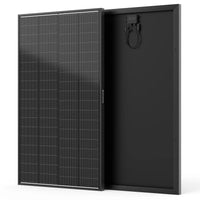
Solar Equipment and Components: All photovoltaic panels, power inverters, electrical wiring, and mounting systems. Basically, any equipment necessary for system functionality qualifies.
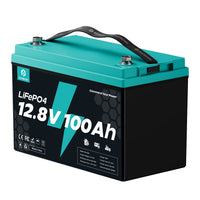
Energy Storage Systems: Battery storage costs qualify if capacity reaches at least 3 kilowatt-hours (kWh). This benefits those seeking energy independence during nighttime or overcast conditions.
Installation Services: Labor expenses for site preparation, equipment assembly, and initial installation are covered. Professional electrician and installer fees qualify.
Administrative Costs: Permit applications and inspection fees required for legal compliance are eligible.
Solar Roofing Products: While standard roofing materials are excluded, solar tiles and shingles that produce electricity qualify for the credit.
Transaction Taxes: Sales tax paid on eligible equipment counts toward your total.
Note that certain rebates, such as utility company subsidies or specific manufacturer incentives, must reduce your total cost before calculating the credit. However, compensation received for excess electricity sent to the grid through net metering programs doesn't affect your eligible expenses.
Filing Process for the Solar Tax Credit
After completing your solar installation and documenting all expenses, you're ready for the rewarding step of claiming your credit. The procedure is simple and centers on one key form during tax filing.
First, ensure your system achieves operational status by December 31, 2025—this deadline is critical for receiving the full 30% benefit. Maintain all receipts and invoices as evidence of your investment.
During tax preparation, you'll complete IRS Form 5695, titled "Residential Energy Credits." This form lets you sum all qualifying costs and determine your credit value. That calculated amount transfers to your primary tax return, directly reducing your federal tax liability.
An important consideration for off-grid users: this credit only applies against federal income tax owed. If your tax obligation falls short of the credit amount, you can roll the unused portion into the next tax year. This ensures you capture every dollar of benefit and can continue applying it until fully utilized. Though straightforward, consulting a tax professional helps guarantee you receive your complete entitlement.
The 2025 Deadline for the 30% Credit
This question concerns many potential solar adopters, and the answer is affirmative—the deadline is approaching.
According to the "One Big Beautiful Bill" enacted into law, the popular Residential Clean Energy Credit officially concludes on December 31, 2025, at midnight.
Here's what this timeline means:
Time is limited: DIY builders, off-grid homeowners, and RV owners seeking to own their systems and claim the 30% benefit must complete installation by year-end. Beyond that date, the residential credit disappears.
Alternative options exist: Though the homeowner credit expires, a separate business tax credit for companies that own and lease solar systems continues. However, this corporate benefit isn't available for individual claims.
This represents a genuine "act now" moment to capitalize on substantial federal support. To secure the complete 30% savings, move quickly and complete your Renogy solar installation before the expiration date.
Stacking Additional Benefits
While the federal solar credit provides excellent savings, it represents just one available incentive. You can frequently combine this federal benefit with state and municipal programs to further reduce your project costs. Many states and local utilities provide their own solar credits, typically structured to allow simultaneous claiming with the federal benefit without interference. Likewise, local utility or state rebates—upfront cash payments that lower initial costs—can also be utilized. Remember that rebates reduce your out-of-pocket expense, so you must deduct the rebate value from your total project cost before computing the 30% federal credit. Conversely, net metering income—credits or payments from your utility for surplus power generation—is handled differently and doesn't diminish your federal credit eligibility. To optimize these opportunities, investigate incentives available in your location and consult with a qualified tax expert to ensure you're correctly maximizing every possible saving.
Common Questions
What if my tax liability is zero this year?
Zero tax liability doesn't eliminate the benefit. Though non-refundable, the solar credit transfers to subsequent tax years until completely utilized. This guarantees you eventually receive the full 30% savings.
Does the credit apply to vacation homes?
Yes, the Federal Solar Tax Credit covers second homes that you own within the United States. Rental properties are excluded. The credit works for both primary and secondary residences, facilitating solar installation on vacation cabins or seasonal properties.
What about installations after 2025?
The 30% Federal Solar Tax Credit remains available through 2032. Beginning in 2033, the percentage decreases to 26%, then 22% in 2034, before ending in 2035 unless Congress extends it. Systems installed after 2025 still qualify for the full 30% through 2032.
Which records are required?
To claim the benefit, maintain receipts and invoices detailing solar equipment and installation costs. Preserve copies of contracts, manufacturer documentation, and payment verification. When filing, complete IRS Form 5695 and include it with your return. Well-organized documentation simplifies the process.
Conclusion
The federal solar tax credit stands among the most valuable financial incentives for achieving off-grid independence. This generous 30% discount covers your complete solar installation, including panels, batteries, wiring, and labor. As a direct credit reducing your tax bill, with carryover capability for unused portions, it provides exceptional value.
For off-grid advocates and DIY builders, this credit transforms solar investment feasibility. It makes substantial solar installations remarkably affordable. However, remember the full 30% benefit expires December 31, 2025, creating an urgent "now or never" opportunity for these substantial savings.
Act promptly. Power your lifestyle while securing every dollar of available benefits. Renogy provides comprehensive solar equipment designed for straightforward DIY installation, including high-performance panels, dependable batteries, and all necessary accessories. With Renogy, you have both equipment and expertise to build a robust, reliable system that delivers power for years ahead.


