

Finding Freedom in the Rockies
When Mark and Sarah Thompson bought their dream cabin in the Colorado Rockies three years ago, they knew it would be an adventure. What they didn't anticipate was spending every weekend wrestling with a temperamental propane generator instead of enjoying the mountain views they'd come for.
"We escaped the city to find peace," Sarah laughs, "but ended up with this monster that roared to life at 6 AM whether we wanted it to or not. Our neighbors half a mile away could hear it. So much for tranquility."
The cabin, nestled 12 miles from the nearest power line, had relied on that generator for everything - lights, refrigeration, water pump, even charging their phones. Between the monthly propane bills, constant maintenance, and the sheer noise of it all, Mark knew something had to change.
The Solar Solution
After months of research and talking to other off-grid homeowners, Mark decided to build a solar system. The question wasn't whether to go solar, but how much was enough.
"I'm an engineer by training," Mark explains, "so I did what engineers do - I measured everything. For two weeks, we tracked every watt we used. Turned out we needed about 3-4 kWh per day on average, with spikes when we ran power tools or did laundry."
He ended up choosing ECOBOSS for both the solar panels and batteries. "I'd seen their products recommended in several off-grid forums. What convinced me was the combination of efficiency and durability. Living at 9,000 feet elevation, we get intense sun, heavy snow, and hail. I needed equipment that could handle it."
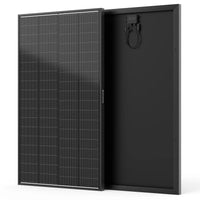
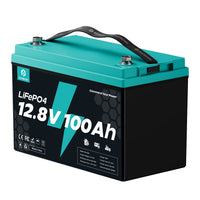
The system he designed was straightforward: eight 200-watt rigid panels on the south-facing roof and two 12V 300Ah LiFePO4 batteries tucked into an insulated battery room. Total capacity of 1,600 watts of solar and 7.68 kWh of storage.
"The ECOBOSS rigid panels were perfect for our situation," Mark says. "That aluminum frame isn't just for looks - it's engineered to handle serious snow loads. And at our elevation, we get a lot of snow."
Installation and First Light
Mark handled most of the installation himself over two weekends, with help from an electrician friend for the final connections. "The ECOBOSS panels were surprisingly straightforward to work with. Good documentation, quality MC4 connectors, and the mounting holes lined up perfectly with standard rails."
The batteries impressed him even more. "I expected them to be back-breaking heavy, but at about 60 pounds each, they were manageable. More importantly, the built-in BMS gave me confidence. I'm not a battery expert - I needed something intelligent enough to protect itself."
When the system first came online on a bright June morning, Mark remembers checking the monitoring system obsessively. "Watching those watts roll in was addictive. By 10 AM, we were generating over 1,200 watts. By 2 PM, the batteries were full. I called Sarah over and we just stood there grinning at the numbers."
Six Months of Real-World Testing
Fast forward six months, and the Thompsons have put their ECOBOSS system through its paces across two distinct Colorado seasons. The results have exceeded their expectations, particularly during the challenging winter months.
Summer was predictable - abundant power, batteries full by early afternoon, enough surplus to run a washing machine and power tools without a second thought. "We had so much power we were looking for ways to use it," Sarah jokes.
But winter told the real story. "November and December were the test," Mark explains. "Short days, low sun angle, and frequent storms. I was nervous. Turned out I had nothing to worry about."
Even on the shortest days of December, the system consistently generated 4-6 kWh when the sun appeared. "What surprised me was how well the panels performed in cold weather. There's this misconception that solar doesn't work in winter. The truth is, the ECOBOSS panels are actually more efficient in cold temperatures. We'd get these crystal-clear mornings after a snowstorm, and the system would be pushing 1,400 watts with all that reflected light from the snow."
The 300Ah batteries proved equally impressive in the cold. "We had a three-day snowstorm in mid-December where we saw minimal solar input. The batteries carried us through without dropping below 40%. That buffer gave us real peace of mind."
Life Without the Generator
The most striking change wasn't captured in kilowatt-hours or charging curves - it was the quality of their time at the cabin. "We wake up to silence now," Sarah says. "Just birds and wind through the pines. The first morning without the generator, I actually slept until 8 AM. That hadn't happened in three years."
Mark adds, "It's the little things. We can have coffee on the deck without shouting over engine noise. When friends visit, we're not rationing electricity or planning around generator schedules. We just... live. The way you're supposed to at a mountain cabin."
The refrigerator runs continuously now. The water pump works whenever they need it. Sarah can work remotely from the cabin, her laptop powered by sunshine that fell on the roof hours earlier. "I've taken Zoom calls from here with clients who have no idea I'm completely off-grid. The internet works, the lights are on, and there's not a power line for miles."
The generator still sits in the shed, but it's become emergency backup only. "We've run it maybe three times in six months, mostly just to keep it exercised," Mark notes. "It's nice to have, but we don't need it anymore. That's a good feeling."
The Economics and Beyond
Mark is characteristically precise about the financial aspects. "Between propane costs, generator maintenance, and occasional trips to town just to charge batteries at the marina, we were spending about $300 a month. Those costs are essentially gone now. The system will pay for itself, but honestly, that wasn't the main point."
"The real value is freedom," Sarah interjects. "We're not tethered to a noisy machine or a propane delivery schedule. We can come up here for a month in summer and never think about power. That's priceless."
They've also noticed unexpected benefits. The property's value has increased - potential buyers love seeing an established solar system. Their insurance premium dropped slightly because they're no longer storing large quantities of propane. And they've become inadvertent ambassadors for off-grid solar living.
"Our neighbors have been incredibly curious," Mark says. "Three cabins within five miles have installed solar in the last six months. It's becoming the standard solution up here, not the alternative."
Lessons from the Mountains
After living with their ECOBOSS system through two seasons, Mark and Sarah have developed strong opinions about what matters in off-grid solar.
"Size your battery bank generously," Mark advises. "The extra capacity isn't wasted - it's insurance. Those 300Ah ECOBOSS batteries give us two to three days of autonomy. In the mountains, weather changes fast. That buffer lets you ride out storms without stress."
Sarah's advice is more philosophical: "Accept that you'll become a weather watcher. But in a good way. You notice sunrise and sunset. You pay attention to clouds. It makes you more connected to the place, not less."
They also emphasize quality over bargain hunting. "We could have saved money with cheaper components," Mark admits. "But we're 90 minutes from town on a good day. Reliability matters. The ECOBOSS equipment has been bulletproof. Zero issues, zero callbacks to technical support. It just works."
The rigid panel choice has proven wise for their climate. "We get golf-ball-sized hail up here occasionally. The panels have taken direct hits without a crack. That aluminum frame and tempered glass aren't overbuilt - they're built exactly right for mountain conditions."
Current Status: Living the Dream
On a recent January morning, with fresh snow on the ground and temperature at 15°F, Mark checked the monitoring system. The batteries sat at 78% charge from the previous day. By 9 AM, as sun hit the snow-covered panels, the system was generating 1,100 watts. By noon, it would be back to 100%.
"This is exactly what we hoped for when we bought this place," Sarah reflects. "A simple life in the mountains, powered by sunshine. No compromises, no noise, no dependence on systems beyond our control. Just us, the cabin, and enough power to live comfortably."
Mark nods in agreement. "The ECOBOSS solar panels and batteries didn't just solve our power problem. They solved our lifestyle problem. We have the freedom we were looking for all along. The generator was loud. Solar is silent. That silence was worth every penny of the investment."
As they prepare for their next multi-week stay at the cabin, neither gives much thought to power anymore. It's simply there, reliable and abundant, much like the sunshine that falls on their mountain every day.
"That's the goal, isn't it?" Sarah asks. "Technology that disappears into the background and just lets you live. That's what good solar should do. And that's exactly what it does."
System Specifications:
- 8 x ECOBOSS 200W Rigid Monocrystalline Solar Panels (1,600W total)
- 2 x ECOBOSS 12V 300Ah LiFePO4 Batteries (7.68kWh total storage)
- Location: Colorado Rockies, 9,000 ft elevation
- Daily power consumption: 3-4 kWh average
- System age: 6 months
- Uptime: 99.8%
Share your ECOBOSS solar story with us. We love hearing how our products help people live the life they've imagined.


