

I never thought I'd be the type of person who owned a solar panel system. I'm not particularly outdoorsy. I don't consider myself an environmentalist activist. I just wanted my kids to stop crying during power outages.
Let me back up.
We live in Tampa, Florida—Westchase area, if you know it. Nice neighborhood, good schools, about twenty minutes from the beach. My husband David and I moved here from New Jersey eight years ago for his job. We love it. The weather, the lifestyle, the fact that our kids can play outside year-round.
But nobody warns you about hurricane season when you move to Florida. Or rather, they mention it, but you don't really get it until you live through your first one.
September 2024: The Wake-Up Call
Hurricane Ian wasn't even a direct hit on Tampa. It slammed into Fort Myers, about 100 miles south of us. We got the outer bands—heavy rain, strong winds, nothing catastrophic.
But the power went out. And it stayed out. For six days.
Day one was almost fun, honestly. The kids thought it was an adventure. We played board games by flashlight, told stories, made it feel like camping. David grilled everything from the freezer before it went bad. We were managing.
Day two, the novelty wore off. It was September in Florida—hot and humid. Our house felt like a sauna by mid-morning. The kids were cranky. Our phones were dying, and we had no way to charge them except by driving around looking for a gas station with power.
By day three, I was ready to lose it. The food in our refrigerator had all spoiled. We'd been eating out, but half the restaurants were closed. No power meant no AC, no fans, no relief from the heat. We slept with all the windows open, sweating through the sheets.
Day four, our neighbor two houses down—the Johnsons, they're in their seventies—Mrs. Johnson had to go to the hospital. She has a CPAP machine for sleep apnea, and without power, she couldn't use it. Four nights of poor sleep, in that heat, at her age? It was dangerous.
That's when it hit me: this wasn't just an inconvenience. This was a safety issue.
When the power finally came back on day six, I sat David down at the kitchen table.
"We can't do this again," I said.
"What do you want to do? Move?" he asked.
"No. I want backup power."
The Generator Problem
David's first thought was a generator. His buddy from work had one—a big portable unit that sat in the garage and could power the essentials during an outage.
We looked into it. A decent whole-house generator that could handle our AC, refrigerator, and other essentials? We were looking at $8,000-12,000 installed. Plus, it ran on natural gas or propane. And it was loud. David's coworker said his sounded like a lawnmower running 24/7 in the driveway.
I couldn't imagine inflicting that noise on our neighbors for days at a time. Plus, there was something about being dependent on fuel deliveries during an emergency that didn't sit right with me. What if the gas supply got disrupted? What if everyone was trying to fill up at the same time?
I started researching solar power instead.
Down the Solar Rabbit Hole
I'll be honest—I didn't know anything about solar when I started. I thought solar panels were those big installations you see on commercial buildings, costing hundreds of thousands of dollars.
But the more I read, the more I realized there were options for regular homeowners. Systems that could provide backup power during outages while also reducing our electricity bills the rest of the time.
I spent probably three weeks researching. Reading reviews, watching YouTube videos, joining Facebook groups about home solar. David thought I was obsessing.
"You've got spreadsheets for this now?" he said, looking over my shoulder one evening.
"I have spreadsheets for everything," I reminded him. "How do you think we stay on budget?"
The tricky part was figuring out what we actually needed. Our house is about 1,800 square feet. During an outage, we didn't need to run everything—just the essentials:
- The refrigerator (our main fridge, not the garage beer fridge David loves)
- Some lights so we're not stumbling around in the dark
- Ceiling fans to move air
- Phone and device charging
- Maybe the window AC unit in our bedroom so we could sleep
I did the math. The fridge pulls about 150 watts when running. LED lights are minimal—maybe 50 watts total for the whole house. Fans are 50-75 watts each. Phone charging is nothing. The bedroom AC unit is the power hog at around 1,000 watts, but we'd only run it at night.
Total daily usage during an outage? Maybe 5,000-6,000 watt-hours if we were careful.
Building Our System
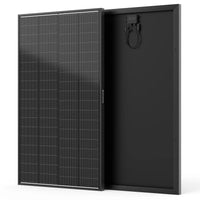
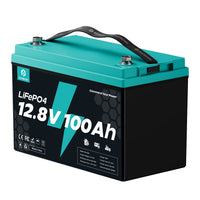
After all that research, we went with four EcoBoss 200W solar panels and a 12V 200Ah battery bank. The system cost us less than that whole-house generator would have, and it didn't require any fuel.
We had it installed in November 2025. The installation crew was great—they mounted the panels on our south-facing roof, ran all the wiring through the attic, and set up the battery in our garage. The whole thing took one day.
The installer explained how it worked: during normal times, the panels charge the battery and can offset some of our electric bill. During a power outage, we'd have stored power ready to use. We'd need to be selective about what we ran—no whole-house AC, no electric dryer—but we could keep the critical stuff going.
"Think of it like a really big power bank for your phone," he said. "Except it's for your house, and it recharges itself from the sun."
I liked that analogy.
For the first few weeks, I'd go out to the garage and just look at the battery system. The display showed how much charge we had, how much power was coming from the panels. It was oddly satisfying watching those numbers climb during sunny days.
David teased me about it. "You're checking on it like it's a pet."
"It's a $7,000 investment," I said. "I'm allowed to monitor it."
The system worked exactly as promised. On sunny days, we'd see the battery hit 100% by early afternoon. Our electric bill dropped noticeably too—not dramatically, but we were pulling maybe 30-40% less from the grid than before. Every bit helps when you've got three kids and Florida summer AC bills.
But the real test would come during hurricane season.
June 2025: The First Real Test
Hurricane season started quietly that year. A few tropical storms, nothing serious. Then in late June, a system formed in the Gulf that had meteorologists concerned.
Tropical Storm Marcus. It strengthened quickly—too quickly. By the time it was 100 miles offshore, it was a Category 2 hurricane, and the projected path had it coming right at Tampa Bay.
I'll admit, I was nervous. We'd never tested the solar system in a real emergency. What if it didn't work? What if I'd made a huge mistake?
We prepped like everyone else in the neighborhood. Brought in patio furniture, stocked up on water and non-perishable food, filled the cars with gas. But unlike our neighbors, I wasn't panicking about losing power.
Marcus hit on a Thursday night. The wind was intense—sustained at 100 mph, gusts higher. We huddled in our interior hallway with the kids, listening to things bang and crash outside. It was terrifying.
Around 11 PM, the power went out. The whole neighborhood went dark.
I waited an hour—let the storm pass mostly—then went to the garage to check our system. The battery was at 89%, fully charged from the previous day. I flipped the switch to disconnect us from the grid and connect to battery power.
The refrigerator hummed to life. The kitchen lights came on. I nearly cried with relief.
"Maria?" David called from the hallway. "Did you—did the power come back?"
"Not for everyone," I said. "Just for us."
Living Through the Outage
That night, we ran minimal loads. Just the fridge and a few lights. I wanted to conserve the battery since we didn't know how long the outage would last or when we'd get sun to recharge.
The next morning, I woke up early and assessed the damage outside. Branches everywhere, a section of fence down, but our house was intact. And importantly, our solar panels were fine—still firmly mounted on the roof.
By 8 AM, the panels were producing power. Even with some cloud cover from the storm's aftermath, I watched the battery percentage start climbing. By noon, we were back to 100%.
That's when I made the decision: we were going to be comfortable.
I turned on the bedroom AC unit. The kids came running.
"Mom! The AC works!" My youngest, Emma, was practically dancing.
"For our room, yes," I said. "We'll take turns cooling off in there. But we need to be smart about it."
We fell into a routine. Run the bedroom AC for a few hours in the afternoon when the solar panels were producing maximum power. Turn it off in the evening and use fans instead. Keep the fridge running 24/7. Charge phones and tablets during the day. Use LED lights sparingly at night.
The battery would drop to maybe 65% by morning, then fully recharge by early afternoon.
Our neighbors noticed. Second day into the outage, our next-door neighbor Amy knocked on the door.
"Maria, I saw your lights on last night. Did your power come back?"
"We're on solar," I explained. "Want to come charge your phones?"
Word spread quickly. By day three, we had become the neighborhood charging station. People would stop by with their phones, tablets, even a laptop once. I'd plug them in while the sun was high, let them charge for an hour or two.
Mrs. Johnson from two houses down came by with her husband. "Could we possibly run an extension cord?" she asked hesitantly. "Just for my CPAP at night?"
"Of course," I said immediately.
We ran a heavy-duty extension cord to their house every night. Her CPAP only drew about 50 watts—barely a blip on our system. But it meant she could sleep safely.
Day Six: Perspective
The power came back to our street on day six. Six days, just like after Hurricane Ian. But this time, it felt completely different.
We never lost our food. Never had to throw out a refrigerator full of groceries. The kids were comfortable—not happy about being stuck inside, but not miserable from the heat either. I could work remotely once the internet came back on day three (I have a cellular hotspot for backup internet). David could check work emails, handle the things that couldn't wait.
Most importantly, I wasn't stressed. After Ian, I'd been anxious and exhausted. This time? I felt calm. In control. Prepared.
When Amy came by to thank me for the phone charging, she asked about the system.
"How much did this cost you?"
I told her the approximate amount.
"That's less than we spent on a generator," she said. "And yours actually works without needing gas."
She wasn't wrong. Several neighbors had generators that either wouldn't start or ran out of fuel mid-outage when gas stations were closed.
The Unexpected Benefits
It's been seven months since we installed the system, and it's changed more than just our emergency preparedness.
Our electric bills are noticeably lower. We're saving maybe $60-80 per month during summer when the AC runs constantly. That's nearly $1,000 per year. At that rate, the system will pay for itself in about seven or eight years—less if electricity rates keep rising like they have been.
But the real value is peace of mind.
Last month, we had a severe thunderstorm roll through. Lightning knocked out power to half the neighborhood for about four hours. It wasn't a big deal—happened in the evening, temperatures were mild.
But I didn't even stress about it. I just flipped our system to battery mode and kept cooking dinner. The kids barely noticed.
David says I've become insufferable about solar power. Maybe he's right. I've told probably a dozen people about our system. Three families on our street are now seriously considering it.
"You've become a solar evangelist," he said last week.
"I'm just sharing information," I protested.
"You have a whole presentation saved on your phone with photos and cost breakdowns."
Okay, maybe I'm a little enthusiastic.
What I'd Tell Someone Considering This
If you're thinking about solar backup power, here's what I learned:
Be realistic about what you need. You probably don't need to run your whole house. Figure out the essentials—fridge, some lights, fans, device charging. Maybe an AC unit if you have the capacity. You don't need the dishwasher or the dryer during a power outage.
The battery is what matters for backup power. The panels are great for recharging and reducing your electric bill, but during an outage, you're running off the battery. Size it appropriately for your needs.
It's cheaper than you think. We spent less on this system than we would have on a whole-house generator, and we get the added benefit of lower electric bills year-round.
Think about your neighbors. Being able to help Mrs. Johnson with her CPAP, letting people charge phones—that community aspect meant more to me than I expected.
Florida-specific advice: Make sure your panels are rated for hurricane-force winds. Ours are rated for 140 mph. So far, so good.
Looking Forward
We've got another hurricane season coming up. I'm not naive enough to think we're immune to problems. A direct hit from a Category 4 or 5 could damage the panels. A week of solid cloud cover would be challenging—we'd have to be very conservative with power use.
But I'm not worried like I used to be. We've got options now. We've got independence.
Last week, Emma asked me what we'd do if another hurricane came.
"Same thing we did last time," I said. "Hunker down, stay safe, and keep the ice cream from melting."
She grinned. That last part was important. During the Marcus outage, our freezer stayed cold enough that we had ice cream every night. Small comfort, but when you're ten years old and stuck inside during a hurricane, these things matter.
David walked past and ruffled Emma's hair. "Your mom and her solar panels saved the day."
"Our solar panels," I corrected. "This is a family investment."
He smiled. "Yeah. Best one we've made."
I looked out the window at our roof, where four black panels sat quietly converting sunshine into security. They're not fancy. They're not going to save the world.
But they saved our sanity during a hurricane. They kept Mrs. Johnson breathing safely at night. They made our kids comfortable when half the neighborhood was sweltering.
That's more than enough for me.
Maria Chen is a mother of three and a remote marketing consultant living in Tampa. She never thought she'd become passionate about electrical systems, but here we are. She's happy to answer questions about solar power from other Florida parents who are tired of hurricane-related meltdowns—both the kids' and their own.


