

By Jake Morrison | April 2025
I sold everything I owned on a Tuesday in March, two years ago.
Not in a reckless, burn-it-all-down kind of way. More like a carefully calculated decision that my Houston apartment, my furniture, my regular life—none of it was making me happy. I'm a software developer, and when COVID hit, my company went fully remote. Suddenly, the question wasn't "where do I need to live?" but "where do I want to live?"
The answer was everywhere. And nowhere permanently.
So I bought a 32-foot travel trailer, spent two months converting it into a proper mobile office, and pointed it west. The plan was simple: work from the road, chase good weather, figure out life as I went.
What I didn't plan for was the power situation becoming the single most important factor in whether this whole experiment would work or fail.
The First Hard Truth
My first week of RV life was parked at a campground outside Austin. Full hookups—water, sewer, and 50-amp electrical service. I plugged in everything. Ran my laptop, monitors, mini-split AC unit, residential refrigerator, microwave, and charged all my devices simultaneously. It was basically like living in an apartment, just with wheels.
The electric bill for that campground? $47 per night.
I did the math in my head. At $47 per night, I'd be spending $1,400 per month just on camping fees. Add in gas, food, and other expenses, and I was looking at spending more on the road than I had been in Houston. That defeated the entire purpose.
I started researching alternatives. BLM land—Bureau of Land Management—offers free camping on millions of acres across the western United States. National forests have dispersed camping. There were endless places I could park for free or nearly free.
But they all had one thing in common: no electrical hookups.
Down the Solar Path
I'm embarrassed to admit how little I knew about electrical systems when I started. I mean, I'm a software guy—I understand logic and systems thinking. But amps, volts, watts, inverters, charge controllers? It was like learning a foreign language.
I spent three weeks parked at my parents' place in Dallas, reading everything I could find. Forums, YouTube videos, solar calculators, battery comparison charts. My dad would come out to the RV and find me surrounded by papers, sketching diagrams.
"You planning to launch this thing into space?" he joked.
"Just trying to make it livable," I said.
The numbers were intimidating. My laptop alone draws about 65 watts. Add in two monitors, and I'm at 150 watts when actively working. The residential fridge pulls 150 watts when the compressor runs. The Starlink internet dish—because I need reliable internet to work—draws 75-100 watts. The mini-split AC unit? That's 500-700 watts when running.
A back-of-napkin calculation showed me using 3,000-4,000 watt-hours per day, and that was being conservative.
Most people would've seen those numbers and said "forget it." But I'm stubborn. And I really didn't want to go back to Houston.
Building the System
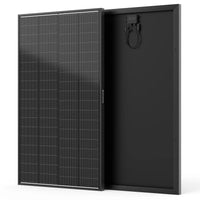
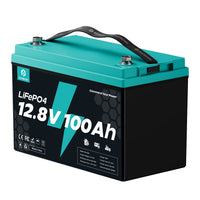
I ended up going with four EcoBoss 200W solar panels and a 48V 100Ah battery system. The 48-volt configuration was critical—higher voltage means lower current for the same power, which means I could use thinner wiring and lose less energy to resistance. In a 32-foot trailer where space is premium, efficiency matters.
The panels went on the roof—all four of them, taking up most of the available space. Installation was nerve-wracking. You're drilling holes through your roof, running wires, trying not to create leak points. I sealed everything three times over with marine-grade sealant. Probably overkill, but water damage in an RV is a death sentence.
The battery bank went under my bed, secured in a custom-built box with proper ventilation. The inverter mounted on the wall near the electrical panel. I spent two full days just running wires, labeling everything, making sure connections were solid.
When I finally threw the main breaker and everything powered up without sparks or smoke, I literally sat down on the floor and exhaled for what felt like the first time in hours.
"Okay," I said to the empty RV. "Let's see if this actually works."
The First Real Test
My first destination was Big Bend National Park in west Texas. I found a dispersed camping spot about fifteen miles from the park entrance—just me, the desert, and endless sky.
Day one, I watched my system like a hawk. The panels started producing around 7:30 AM as the sun cleared the horizon. By 9 AM, I was seeing 600 watts of production. Peak production around noon hit 750 watts—not quite the full 800 the panels were rated for, but pretty close.
I worked a full day—video calls, coding, emails, the whole routine. Ran the fridge continuously. Used lights in the evening. Charged my phone and laptop. By the time I went to bed, the battery was at 87%.
The next morning, I woke up to find it had only dropped to 78% overnight—the fridge and a few phantom loads were the only drains. By 10 AM, the panels had already brought it back to 100%.
"Holy shit," I said out loud. "This is actually working."
I stayed at Big Bend for twelve days. Never plugged in. Never ran a generator. Just pure solar power keeping my entire life running. I was working full-time, had cold food, took video calls with clients, and never once worried about running out of power.
That's when I realized this was actually going to work.
Learning to Live With the Sun
The biggest adjustment wasn't the power system—it was adjusting my life around it.
I learned to do laundry during peak sun hours. My portable washing machine draws 300 watts, but if I run it at noon when the panels are cranking out 700+ watts, it barely touches the battery. Same with cooking—I'd use the microwave for lunch but stick to the propane stove for dinner.
The AC unit was trickier. In the Texas heat, it was tempting to run it all day. But at 600 watts draw, it would drain the battery quickly if I wasn't careful. So I'd cool the RV down during midday when solar production was high, then turn it off and rely on insulation and ventilation in the evening.
I also became obsessed with monitoring. I installed a battery monitor that shows real-time voltage, current draw, state of charge, and power production. It lives on the wall next to my workspace, and I check it compulsively.
My friends think it's weird. "Dude, you're staring at a battery monitor," my buddy Tyler said during a video call.
"I'm optimizing," I corrected him.
"You're obsessing."
He wasn't wrong. But there's something weirdly satisfying about seeing your power consumption in real-time and adjusting behavior accordingly. Use 50 watts on lights? Switch to LEDs and drop it to 15 watts. Laptop pulling 65 watts? Dim the screen and get it down to 50.
It's like a game where the stakes are whether I get to watch Netflix tonight.
The Cascades Changed Everything
Last September, I drove north to Washington state. I'd heard the North Cascades were incredible, and I wanted to see them before fall weather closed the high passes.
I found a dispersed camping spot on Forest Service land near Mazama. Elevation 2,100 feet, surrounded by pine and fir trees, with a creek running fifty yards from my trailer. The nearest town was a twenty-minute drive. The nearest person was... I actually don't know. I didn't see anyone for three days.
I set up camp on a Saturday evening, leveled the trailer, and just stood outside taking it in. Mountains in every direction. The creek providing constant white noise. Air so clean it almost hurt to breathe.
"This is it," I thought. "This is what I left Houston for."
I ended up staying for three weeks.
Every morning, I'd wake up with the sun—which, at that elevation and latitude in September, was around 6:30 AM. I'd make coffee on the propane stove, sit outside on my folding chair, and watch the light move through the valley. By 8 AM, my panels were producing power. By 9 AM, I was at my desk working.
The system performed flawlessly. Washington in September isn't exactly peak solar conditions—lots of clouds, shorter days than summer—but I still averaged 3,000-3,500 watt-hours of production per day. More than enough to cover my needs.
I fell into this rhythm. Work until noon, take lunch, go for a hike. Come back, work a few more hours, then shut the laptop and actually be present. No commute. No fluorescent lights. No office politics. Just me, my trailer, and the mountains.
I took video calls with clients while sitting outside, mountains in the background. One guy asked where I was, and when I told him, he said, "Must be nice."
"It is," I said. "You should try it."
When Things Went Wrong
Week two in the Cascades, we got three straight days of heavy clouds and rain. The kind of weather where the sky is just one uniform grey and you can't even tell where the sun is.
My panels went from producing 3,500 watt-hours daily to maybe 800. The battery started dropping. Day one, I went from 100% to 73%. Day two, from 73% to 51%. By day three, I was at 32% and getting nervous.
I cut everything non-essential. Fridge stayed on—I wasn't losing my food. Starlink stayed on—I had to work. Everything else? Off. No microwave. Minimal lights. No charging random devices.
I cooked dinner on the propane stove by headlamp, sitting inside my darkened trailer, watching the battery percentage on my monitor. It felt a bit dramatic, honestly. Like I was in some kind of wilderness survival situation, except I was still answering work emails and had a refrigerator full of food.
Day four, the clouds broke. Just for a few hours in the afternoon, but it was enough. The panels jumped to 550 watts, and I watched the battery climb from 29% to 48% in three hours. By day five, we had partial sun all day, and I was back to 85%.
That's when I learned the real lesson: it's not about having perfect conditions. It's about having enough capacity to handle the bad days and enough production to recover when conditions improve.
The Cost Nobody Talks About
Here's what nobody tells you about RV solar: it's not just about the equipment cost. It's about the opportunity cost.
Before solar, I could've stayed at that campground in Austin indefinitely. $47 per night felt expensive, but I'd have unlimited power and wouldn't have to think about anything.
With solar, I can stay in the Cascades for free. But I have to think about power constantly. Is it going to be cloudy? Should I do laundry today or wait for better sun? Can I run the AC, or should I just open windows?
Some people would hate that. The constant calculation, the monitoring, the adjusting.
I kind of love it.
There's something about being conscious of your energy use that makes you appreciate it more. Every watt-hour I generate from the sun is mine. I captured it. I stored it. I'm using it to power my life.
When I run my laptop off solar power I collected that morning, there's a satisfaction to it that I never got from plugging into the grid. It sounds ridiculous, but it's true.
Two Years Later
I'm writing this from a spot near Sedona, Arizona. It's early April, and the desert is blooming. My battery is at 94%, and the panels are putting out 620 watts in the late afternoon sun.
I've been living in this trailer full-time for two years. I've parked in national forests, BLM land, state parks, and the occasional campground when I need to dump tanks or refill water. I've worked from Nevada, Montana, Colorado, New Mexico, Utah, and both Washingtons—the state and DC, though I didn't love DC.
The solar system has been the backbone of everything. Without it, none of this works. I'd either be paying $1,400 monthly for campground fees or I'd be back in an apartment somewhere, wondering what could've been.
Instead, I'm here. Working remotely, living simply, going wherever I want.
The system isn't perfect. I've had to replace a charge controller that failed after a lightning storm nearby. I've learned that dust on the panels really does reduce output—I clean them every few weeks now. I've accepted that winter in northern states means either finding campgrounds with hookups or heading south.
But those are minor inconveniences compared to what I've gained.
What I'd Tell Someone Starting Out
People ask me all the time if they should do this. Go solar, hit the road, work remotely.
My answer is always the same: it depends on what you value.
If you value convenience, predictability, and not thinking about where your power comes from, this life isn't for you. Stay in a house or apartment. Plug into the grid. Live normally.
But if you value freedom, self-sufficiency, and the ability to wake up in a different place every week—if that sounds more appealing than a mortgage and a yard—then yeah, maybe this is for you.
The solar system is the price of admission. For me, four panels and a good battery wasn't an expense—it was an investment in a completely different way of living.
Last week, I had a video call with my old boss from Houston. He asked how things were going.
"Really good," I said. "I'm parked near Sedona right now. Red rocks everywhere. It's 75 degrees."
"Must be nice," he said. Same thing that client had said.
"It is," I said.
And I meant it.
Behind me, through the RV window, you could see the solar panels on my roof, quietly converting sunlight into the electricity keeping my entire life running. My boss couldn't see them on the video call, but I could. And I smiled.
Those panels bought me my freedom.
Best investment I ever made.
Jake Morrison is a software developer living full-time on the road. He specializes in backend systems and occasionally remembers to check his battery monitor. Follow his adventures


