








● Innovative MPPT technology with up to 99% tracking efficiency
● Multiple intelligent protections
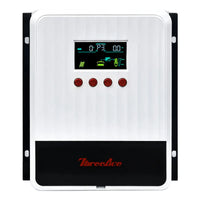
● Powerful LCD display, easy to operate, intuitive LCD display clearly shows status and data, and allows mode switching and parameter configuration.
● Industrial-grade main control chip: 16AD sampling accuracy, accurate real-time display of temperature/charging current, discharge current, power generation at a glance
Powerful Performance. Exceptional Value.
EcoBoss 60A MPPT Charge Controller is designed for maximum efficiency, featuring up to 99% tracking efficiency to optimize solar charging and deliver more energy to your battery bank. It supports charging and discharging for various 12V/24V/ battery types, including Gel, AGM, Lithium, LiFePO4, Flooded, and NCM/NCA batteries, making it ideal for off-grid solar systems.


Specification
PA60415 MPPT Solar Charge Controller Specifications
System Parameters
Controller Model
PA60415 (MPPT)
System Rated Voltage
12V / 24V / 48V Auto-recognition
Battery Type
Custom / Sealed / Flooded / Gel / Lithium
PV Input Voltage Range
10–64V
Self-consumption
0.7–1.2W
Input Characteristics
Rated PV Input Power
800W (12V) / 1600W (24V) / 2400W (36V) / 3200W (48V)
Max PV Open-circuit Voltage
150Vdc
PV Input Operating Voltage Range
18–150Vdc (12V System)
36–150Vdc (24V System)
50–150Vdc (36V System)
64–150Vdc (48V System)
36–150Vdc (24V System)
50–150Vdc (36V System)
64–150Vdc (48V System)
MPPT Operating Voltage Range
18–110Vdc (12V System)
36–110Vdc (24V System)
50–110Vdc (36V System)
64–110Vdc (48V System)
36–110Vdc (24V System)
50–110Vdc (36V System)
64–110Vdc (48V System)
Max PV Input Current
60A
Charging Characteristics
Max Charging Efficiency
≥ 99.9%
MPPT Tracking Efficiency
85% – 98%
Temperature Compensation
–3mV/°C/2V
DC Load Output Characteristics
DC Load Output Voltage
Same as Battery Voltage
Max Load Output Current
20A
USB Output
5V / 2A
Load Control Modes
Manual / Light Control / Light + Timer
Protection
Protection Features
PV Reverse Polarity Protection
Battery Reverse Protection
Over-temperature Protection
Over-current Protection
Input Over-voltage Protection
Input Over-current Protection
Load Short-circuit Protection
Battery Reverse Protection
Over-temperature Protection
Over-current Protection
Input Over-voltage Protection
Input Over-current Protection
Load Short-circuit Protection
Cooling
Natural Cooling
Communication Interfaces
RS485 / RS232
Protection Rating
IP32
Display
High-brightness LCD
BMS Activation
No (Optional models available)
Environmental Conditions
Operating Temperature
–20°C to +50°C
Storage Temperature
–30°C to +70°C
Humidity
0–90% RH
Mechanical Specifications
Dimensions
310 × 215 × 83 mm
Weight
— (Data unclear in source)
Frequently Asked Questions
What makes an MPPT controller better than a PWM controller?
An MPPT controller tracks the maximum power point of the solar panels in real time, allowing it to convert excess voltage into usable charging current. This improves charging efficiency by 15–30% compared to PWM controllers, especially in cold weather, cloudy conditions, or when using higher-voltage solar arrays.
How many solar panels can a 60A MPPT controller handle?
A 60A MPPT controller can support large solar arrays as long as the total panel wattage and open-circuit voltage (Voc) stay within the controller’s input limits. For a 12V system, it typically supports up to around 800W, and for a 24V system up to around 1600W. You just need to ensure the combined Voc does not exceed the controller’s maximum PV input rating.
Is this controller compatible with LiFePO₄ batteries?
Yes, the controller works with LiFePO₄, AGM, GEL, Flooded, and other deep-cycle batteries. It provides precise charging stages designed for lithium profiles, ensuring stable voltage, faster charging, and longer battery life as long as you select the correct battery type before use.
Can I use this controller in a 12V or 24V system?
The controller automatically detects whether the battery system is 12V or 24V as soon as it is connected. It will adjust charging parameters accordingly, so there is no manual switching required as long as the battery is connected before the solar panels.
Do I need to connect the battery before connecting the solar panels?
Yes, the battery must always be connected first so the controller can recognize the system voltage and initialize properly. Connecting the solar panels first may cause incorrect voltage detection or protection triggers, which could prevent the system from working.
Can this controller be used with series or parallel solar panel connections?
It supports both series and parallel configurations as long as the final Voc stays within the controller’s PV input limit. Panels in series increase voltage, which is ideal for long cable runs, while parallel connections increase current. You can choose either method depending on your installation.
Does the controller work in cold or hot climates?
The controller is designed for wide operating temperatures and includes automatic temperature compensation for batteries that require it. It can safely operate in both cold and hot environments as long as it has proper ventilation and is not placed in direct sunlight or enclosed spaces that trap heat.
What happens if my solar input exceeds 60A?
The controller will limit the output to 60A to protect the system, meaning it will not overcharge the battery or damage itself even if the solar array’s theoretical output is higher. This allows oversizing your solar array slightly for better performance in cloudy weather.
Recently viewed
Last seen items