
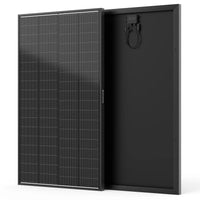
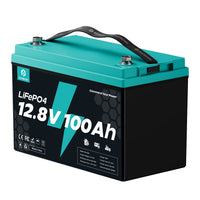

Are you interested in installing solar panels on your RV or camper but unsure where to begin? From complete solar systems to inverters, and choosing the right solar panels for your recreational vehicle, there are many factors to consider when selecting a solar power solution for your rig.
Why Choose RV Solar Panels?
RV solar panels offer an excellent way to power your vehicle when you want to venture beyond traditional electric hookup sites and explore dry camping or boondocking. With an EcoBoss solar system installed in your RV or camper, you can power all or most of your electrical needs, including lights, appliances, and even your air conditioning unit.
No matter what size RV you own, there are several important factors to understand before making your solar panel purchase.
RV Solar Panel Systems: Choosing the Right Option
When selecting solar panels for your RV or camper, you have two main options to consider:
1) Portable RV Solar Panel System
Portable solar panel systems are the simplest to set up and operate. These systems usually connect to a dedicated solar port on your RV and feature one or more 100-watt panels that can be secured to your roof with Velcro straps. Alternatively, some portable panels come in suitcase-style configurations, allowing you to connect them via cable and position them in the sunniest spot around your campsite.
A portable system is perfect for RVers with modest power requirements—perhaps you want to run lights, charge devices like phones and laptops, and maintain your trailer batteries. This option typically has a lower initial cost, though you may pay more per watt for the convenience of portability.
2) Permanent RV Solar Panel System
Permanent solar panel installations require a higher upfront investment but deliver superior efficiency. You'll maximize value per solar watt, utilize unused roof space effectively, maintain constant solar collection (even while driving), and eliminate setup time once parked.
Professional installation by RV dealers or specialized solar companies is typical for permanent systems. These setups are designed for those seeking maximum solar power to run not only small devices but also major appliances like refrigerators, microwaves, coffee makers, and air conditioners.
Determining Your Solar Panel Requirements
To determine how many panels you need, start by assessing your RV's power consumption. Solar panels are measured in watts, so you'll need to calculate the wattage (or watt-hours) for every device you plan to power with solar energy—refrigerator, microwave, phones, television, and more.
Calculating Power Consumption
Find the amp or watt rating on your devices. If a device only lists amps, multiply by voltage to convert to watts.
Example: A 120-volt rice cooker drawing 3 amps equals 360 watts (120 × 3).
Next, determine daily usage duration and multiply by the wattage to calculate daily watt-hours.
Example: Using the rice cooker for 30 minutes (0.5 hours) consumes 180 watt-hours (360 watts × 0.5).
Calculating Solar Panel Quantity
Once you know your power consumption, you can determine the required number of panels and total solar wattage.
Many assume a 100-watt panel produces 800-1,000 watts daily (8-10 hours of sunlight). However, a realistic estimate is approximately 350 watts per day per 100-watt panel, accounting for weather conditions, sun angle, and panel efficiency.
Example: Daily usage includes:
- Phone: 5 watts × 1 hour = 5 watt-hours
- Rice cooker: 360 watts × 0.5 hours = 180 watt-hours
- Hair dryer: 1,500 watts × 0.1 hours = 150 watt-hours
Total: 335 watt-hours per day
In this scenario, one 100-watt solar panel would sufficiently charge your battery and power your devices daily. (Consult with installation professionals to confirm your specific panel requirements.)
Essential Components for Your RV Solar System
Beyond solar panels, you'll need several additional components:
- Battery bank
- Inverter
- Charge controller
Battery Bank
Batteries store electricity generated by solar panels, enabling your RV to operate when sunlight isn't available (nighttime or cloudy weather). Solar panels don't directly power devices—they charge batteries, which then supply power to your systems.
Most batteries are 12-volt or 24-volt, rated in amp-hours (Ah). Ideally, choose a battery with sufficient capacity to power your devices for several days. This ensures you have reserve power during periods of limited sunlight.
To calculate required battery capacity (amps), divide your total watt-hours by voltage.
Inverter
An inverter converts DC power (generated by solar panels) into AC power for your RV's electrical system. It can also convert AC power to DC for battery charging.
To size your inverter properly, calculate the maximum watts you'll use simultaneously and multiply by 1.25.
Charge Controller
A charge controller creates a one-way energy pathway, directing power from solar panels to your battery bank.
It also monitors and prevents issues like overcharging or excessive discharge that could damage your batteries.
Is RV Solar Worth the Investment?
The answer varies by individual, but installing an EcoBoss solar system involves both time and financial considerations.
RV solar panels are ideal for those who:
- Want greater off-grid camping flexibility; solar enables self-sufficient power without campground electrical connections
- Seek environmentally sustainable energy solutions
- Prefer the silent operation of solar collection over noisy gas-powered generators
With proper research, time investment, and quality EcoBoss equipment, you can dramatically expand your RVing possibilities and destinations.


