
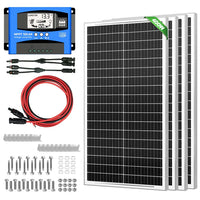

One of the most common concerns homeowners have before investing in solar is whether panels can generate electricity when it's overcast. The straightforward answer: yes, solar panels absolutely work on cloudy days—they just operate at reduced capacity.
Solar panels still generate electricity from diffuse light on overcast and rainy days, just at reduced efficiency. Understanding exactly how much power you can expect and what technologies optimize cloudy-day performance is essential for making informed decisions about your EcoBoss solar system installation.
How Solar Panels Generate Power Without Direct Sunlight
Solar photovoltaic (PV) panels rely on daylight, rather than direct sunlight or heat. This is a critical distinction many people miss.
Solar panels use photovoltaic cells to convert photons—light particles—into electricity. While direct sunlight is ideal, diffused sunlight—which scatters through clouds—still contains photons that panels can absorb.
Even on a fully overcast day, about 10-20% of the sun's energy still reaches the Earth's surface, allowing PV panels to continue generating electricity.
Think of it this way: even on the gloomiest days, you can still see and read outdoors. That visible light is precisely what your EcoBoss monocrystalline solar panels capture and convert into usable electricity.
Real-World Performance Data: What to Expect
According to a study conducted at the University of Port Harcourt, Nigeria, there was a 23.80% loss in power output of a 250W monocrystalline solar module due to light cloud cover and a 66.75% loss in power output due to heavy cloud cover.
With light cloud cover, the solar module maintained 76.20% of its normal output, while during heavy cloud cover, the module generated only 33.25% of its rated capacity.
Output by Cloud Condition
Light cloud cover (thin, high clouds):
- Output: 60-80% of rated capacity
- Solar panels are 76% effective even when there is light cloud cover
Moderate overcast:
- Output: 25-50% of rated capacity
- Sufficient for baseline household loads
Heavy storm clouds:
- Output: 10-25% of rated capacity
- On average, panels can produce 10% to 25% of their rated capacity on cloudy days
Dense fog:
- Output: 10-20% of rated capacity
- Minimal but continuous generation
These numbers represent real-world EcoBoss system performance, not theoretical calculations. A properly designed residential solar array will continue generating valuable electricity throughout most overcast conditions.
Why Cloud Type Matters More Than You Think
Not all cloudy days impact solar production equally. The impact varies by cloud type: thin, high clouds might reduce output by only 20-30%, while dark storm clouds can drop production by over 90%.
Thin cirrus clouds (high-altitude ice crystal clouds) scatter relatively little sunlight and allow 70-80% transmission to reach your panels.
Stratus clouds (low, uniform gray layers) block more light but still permit 40-60% transmission during typical overcast conditions.
Cumulonimbus clouds (thunderstorm clouds) are the most problematic, sometimes blocking 90%+ of direct sunlight during active storms.
The Surprising "Edge-of-Cloud Effect"
Interestingly, sometimes partially cloudy days can be better for solar production due to "cloud lensing" or the "edge-of-cloud effect".
This phenomenon occurs when sunlight refracts through ice crystals in cloud edges, temporarily concentrating more light onto your panels than would hit them on a completely clear day. Dutch researchers have found that solar power production could be stronger under partially cloudy skies compared to clear skies because clouds reflect more light.
While unpredictable and brief, these edge-of-cloud events can push your EcoBoss solar panels above their rated capacity for short periods—sometimes reaching 110-120% of normal output.
Technologies That Excel in Cloudy Conditions
Monocrystalline vs. Polycrystalline Performance
Monocrystalline is the best for cloudy days because the cells used in their construction are made of the highest quality of silicon, while the crystals used are formed from a single item.
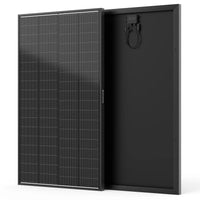
Monocrystalline panels use single-crystal silicon cells, offering higher efficiency and better performance in low-light conditions. Monocrystalline panels generate 20% to 30% more power than polycrystalline panels on overcast days, thanks to their superior photon absorption.
Why monocrystalline performs better:
- Higher purity silicon allows better electron flow
- Superior low-light response in diffuse conditions
- Better spectral response to scattered light wavelengths
All EcoBoss residential solar panels use premium monocrystalline technology specifically for this advantage in variable weather conditions.
Bifacial Solar Panels: Dual-Sided Generation
In cloudy conditions, when a portion of sunlight is diffuse and coming from various angles, bifacial technology can increase energy yield by 5-15% compared to traditional modules.
Bifacial panels generate additional energy by capturing sunlight reflected off rooftops, grass, or snow—boosting efficiency by 10-20% in cloudy weather.
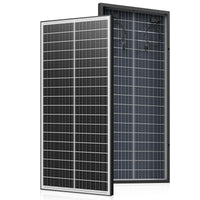
Bifacial panels capture light on both front and rear surfaces. During overcast conditions, diffuse light comes from all directions—including reflected light from the ground. A bifacial 400W panel in a diffuse-light environment may produce 420–430 watts equivalent due to rear-side gain, while a monofacial panel of the same rating outputs only 380–390 watts.
EcoBoss bifacial solar systems are particularly effective for:
- Ground-mounted installations over light-colored surfaces
- Elevated roof-mounted arrays with reflective roofing
- Snowy regions where snow reflection adds significant rear-side gain
Microinverters for Partial Cloud Optimization
Microinverters optimize each solar panel individually, meaning partial shading or cloud coverage on one panel won't affect the entire system, improving energy output by 5-15%.
Traditional string inverters reduce the entire array output to match the lowest-performing panel. With microinverters on each EcoBoss panel, sections receiving better light continue operating at higher capacity even while other sections experience heavier cloud cover.
Geographic Considerations: Solar Success in Cloudy Climates
Germany—a leader in renewable energy that's famous for its lack of sunlight—accounts for about 25 percent of the world's solar power output.
Some of the most solar-powered cities in the U.S. have frequent cloudy weather, demonstrating that solar viability depends more on electricity rates and incentives than constant sunshine.
Successful cloudy-climate solar cities:
- Seattle, WA: Frequent rain and overcast
- Portland, OR: Heavy winter cloud cover
- Boston, MA: Variable New England weather
- San Francisco, CA: Summer fog patterns
The cost of electricity—not the number of cloudy or cold days—is the biggest factor in determining whether solar saves people money on their electric bill.
Optimizing Your EcoBoss System for Cloudy Performance
1. Choose High-Efficiency Panels
Premium monocrystalline panels with efficiency ratings above 20% perform significantly better in low-light conditions than budget alternatives. EcoBoss solar installations prioritize high-efficiency modules specifically for this reason.
2. Proper System Sizing
If you live in an area with lots of rainy and overcast days, you may be wondering if solar power is still a smart investment. The answer is often yes—with the right solar system design, even cloudy locations can benefit from solar energy.
Size your solar array 25-35% larger to account for lower yields in frequently overcast regions. This ensures adequate energy production even during extended cloudy periods.
3. Optimal Tilt and Orientation
Fixed-tilt systems in cloudy regions benefit from lower tilt angles (15°–30°) to maximize exposure to diffuse sky radiance.
Slightly flatter panels capture more diffuse light from the entire sky hemisphere rather than optimizing only for direct sunlight angles.
4. Battery Storage Integration
Solar batteries like the Tesla Powerwall store excess energy generated on sunny days, ensuring power availability during extended cloudy periods.
EcoBoss solar battery storage systems allow you to bank energy during high-production periods and draw from storage during consecutive overcast days, maintaining consistent household power.
5. Regular Maintenance
During heavy rain output drops, but this does have the added effect of cleaning dust and dirt from the panels which improves their overall efficiency.
While rain naturally cleans panels, periodic manual cleaning in dry climates prevents buildup that further reduces already-diminished cloudy-day output.
Seasonal Patterns in Cloudy Climates
In some hotter climates, like Spain, data from sites we have developed shows that our panels perform best in January and February.
This counterintuitive finding occurs because cooler temperatures improve panel efficiency, offsetting slightly reduced sunlight hours. Solar panel efficiency typically drops by about 0.5% for every degree above 25 degrees Celsius.
Your EcoBoss system may actually perform better on cool, partly cloudy spring days than on scorching hot summer days—the temperature benefit can outweigh the cloud penalty.
The Economics: Is Solar Worth It in Cloudy Regions?
In New York and San Francisco, for example, the high cost of electricity makes solar installation worth the investment for home and business owners.
Key economic factors:
- Higher electricity rates justify lower production
- State and local incentives offset system costs
- Net metering policies credit excess sunny-day production
- 25-30 year system lifespan averages out seasonal variations
A professionally designed EcoBoss solar system accounts for your region's average cloud cover, sizing the array to meet your annual energy needs despite weather variability.
Common Myths Debunked
Myth: "Solar panels don't work at all on cloudy days." Reality: Solar panels still generate electricity from diffuse light on overcast and rainy days, just at reduced efficiency.
Myth: "You need constant sunshine for solar to be worthwhile." Reality: Solar power can work well in typically cloudy, cold locations. New York, San Francisco, Milwaukee, Boston, Seattle all top the list of U.S. cities that see the highest level of savings thanks to solar installations.
Myth: "Cloudy weather makes solar a bad investment." Reality: Proper system sizing, high-efficiency panels, and favorable electricity rates make solar viable in most climates regardless of cloud frequency.
Maximizing Value from Cloudy-Day Production
Even at 25-50% capacity, your EcoBoss solar system continues delivering value:
Reduced grid dependence: Every kilowatt-hour generated—even on overcast days—is one less purchased from the utility.
Net metering benefits: Many utilities credit solar exports at retail rates, allowing sunny-day overproduction to offset cloudy-day shortfalls.
Environmental impact: Cloudy-day generation still displaces fossil fuel consumption, reducing your carbon footprint year-round.
System longevity: Solar panels rely on daylight, rather than direct sunlight or heat, to generate clean, renewable electricity, meaning they work continuously without mechanical wear regardless of weather.
The Bottom Line
Solar panels absolutely work on cloudy days, typically producing 25-80% of their rated capacity depending on cloud thickness. Modern monocrystalline technology, bifacial designs, and microinverter optimization have made solar viable in virtually any climate where people live.
Don't let cloudy skies ruin your energy supply. A properly designed EcoBoss solar installation accounts for your local weather patterns, ensuring adequate annual energy production even in frequently overcast regions.
The question isn't whether solar works on cloudy days—it demonstrably does. The real question is whether the total annual production meets your energy needs and delivers positive financial returns. In most cases, even in cloudy climates, the answer is a resounding yes.
Abstract
Solar panels generate 10-80% of rated capacity on cloudy days depending on cloud thickness and type. Light cloud cover reduces output to 60-80%, moderate overcast to 25-50%, and heavy storms to 10-25%. Monocrystalline panels outperform polycrystalline by 20-30% in low-light conditions due to superior silicon purity. Bifacial technology adds 5-15% generation in diffuse light by capturing reflected ground light. University of Port Harcourt research shows 250W modules maintain 76.20% output under light clouds but only 33.25% under heavy cover. Microinverter systems improve partial cloud performance by 5-15% versus string inverters. Economic viability depends more on electricity rates than sunshine—cities like Seattle, Portland, and San Francisco achieve strong solar ROI despite frequent overcast. Proper EcoBoss system design accounts for regional cloud patterns, sizing arrays 25-35% larger in frequently cloudy climates to ensure adequate annual production.
Keywords: EcoBoss monocrystalline solar panels, solar panel efficiency cloudy weather, bifacial solar panel performance, microinverter optimization system, residential solar battery storage solutions, diffuse light solar generation data, cloudy climate solar ROI calculator, high-efficiency solar panels low-light


