
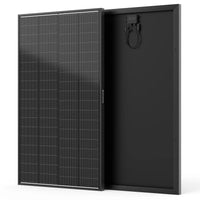

The most common question homeowners ask when considering solar: "How many panels do I actually need?" The answer isn't one-size-fits-all. Most homeowners need 15 to 19 solar panels to power their homes, but the exact number depends on home size, energy usage, and sunlight exposure.
Understanding your panel requirements helps you evaluate EcoBoss solar system quotes effectively, maximize energy production, and optimize your investment without overspending. This guide walks you through a simple four-step calculation to determine your exact solar needs.
Quick Reference: Solar Panel Requirements by Home Size
A typical home needs between 17 and 21 solar panels to cover 100 percent of electricity usage, but actual requirements vary significantly based on multiple factors beyond square footage alone.
| Home Size | Monthly Bill | Panels Needed | Roof Space | System Cost (After Tax Credit) |
|---|---|---|---|---|
| 1,000 sq ft | $77 | 8-10 | 141-177 sq ft | $6,500-$8,200 |
| 1,500 sq ft | $115 | 12-15 | 211-265 sq ft | $9,800-$12,300 |
| 2,000 sq ft | $153 | 15-19 | 264-334 sq ft | $13,000-$16,000 |
| 2,500 sq ft | $191 | 19-23 | 334-405 sq ft | $16,300-$19,800 |
| 3,000 sq ft | $230 | 23-28 | 405-494 sq ft | $19,600-$24,000 |
Assumes 400W panels, average peak sun hours, and $0.17/kWh electricity rate
The 4-Step Solar Panel Calculator
Step 1: Find Your Monthly Electricity Usage (kWh)
Check your utility bills for monthly kilowatt-hour consumption. Your bill should show usage for 30 days, which you can use to determine daily electricity consumption by dividing total usage by the number of days.
Example: 1,050 kWh monthly usage ÷ 30 days = 35 kWh daily average
For the most accurate calculation, average 12 months of bills to account for seasonal variations.
Step 2: Determine Peak Sun Hours for Your Location
Peak sun hours represent when solar irradiance averages 1,000 watts per square meter or 1 kW/m²—the standard intensity used to rate solar panels.
U.S. Regional Averages (Monthly Peak Sun Hours):
- Northeast: 122-149 hours
- Southeast: 152-179 hours
- Midwest: 122-152 hours
- Northwest: 152-198 hours
- Southwest: 198-228 hours
Daily peak sun hours: Divide monthly total by 30
Step 3: Calculate Required System Capacity
Formula: Monthly kWh usage ÷ Monthly peak sun hours = System size (kW)
Example: 1,050 kWh ÷ 150 peak sun hours = 7.0 kW system needed
Step 4: Determine Panel Quantity
Formula: System size (watts) ÷ Panel wattage = Number of panels
Example: 7,000W ÷ 400W per panel = 17.5, rounded to 18 panels
Most homes would need around 25 EcoBoss 400W solar panels to fully cover daily electricity needs of 30kWh, though actual requirements vary by location and efficiency.
Key Factors Affecting Panel Requirements
1. Your Actual Energy Consumption
The amount of electricity you use has the biggest impact on how many solar panels you need. Two identically sized homes can have vastly different requirements based on occupancy, appliances, and habits.
Panel requirements by monthly usage:
| Monthly kWh | 400W Panels Needed |
|---|---|
| 800 | 14 |
| 1,000 | 17 |
| 1,200 | 21 |
| 1,400 | 24 |
| 1,600 | 27 |
| 1,800 | 31 |
Two elderly grandparents in a home with gas appliances have very little electricity need, while a family of four with all-electric appliances would use considerably more—same sized house, different consumption.
2. Geographic Location and Sunlight Exposure
One 400-watt panel in Arizona can produce almost 90 kWh monthly, while the same panel generates only 36 kWh in Alaska.
Your location dramatically affects how many panels you need. A 2,000 sq ft home would need between 16 panels in sunny Arizona and 21 panels in cloudier Michigan to generate equivalent energy.
3. Panel Wattage and Efficiency
Modern EcoBoss residential panels range from 350-470 watts. Higher wattage panels produce more electricity in the same space, making them ideal for roof-constrained installations.
Panel count by wattage (for 7 kW system):
- 350W panels: 20 panels needed
- 400W panels: 18 panels needed
- 450W panels: 16 panels needed
Higher-efficiency panels cost more upfront but require less roof space and fewer mounting components.
4. Roof Characteristics
South-facing roofs with 30-45 degree angles are ideal for maximum solar energy production in the United States. Panels on east/west or north-facing roofs may require 10-15% additional capacity.
Roof space requirements: Each 400W panel requires approximately 17-20 square feet, meaning a 20-panel system needs 340-400 sq ft of usable roof space.
Obstructions like vents, chimneys, and skylights reduce available installation area, potentially requiring higher-efficiency panels to compensate.
5. Shading and Tree Coverage
Even if your area enjoys high peak sunlight hours, tree coverage may diminish total energy generation, requiring additional panels or tree trimming.
EcoBoss microinverter systems minimize shading impact by optimizing each panel independently, but eliminating shade entirely delivers best results.
Common Sizing Limitations
Budget Constraints
Quality residential solar installations range from $2.50-$3.50 per watt before incentives in 2025. A typical 7 kW system costs $17,500-$24,500 before the 30% federal tax credit.
After tax credit: $12,250-$17,150 net investment
If full system cost exceeds your budget, you can install fewer panels initially and expand later as finances allow.
Utility Net Metering Restrictions
Many utilities limit installations to cover up to 120% of annual energy usage to prevent over-installation for extra bill credits.
Some utilities also provide reduced compensation for excess solar exports beyond consumption, making oversized systems economically inefficient.
Physical Roof Limitations
Not all roofs can support solar panels—roof age, material, pitch, and structural capacity all factor into feasibility.
A typical 20-panel system weighs approximately 800 pounds (40 lbs per panel), requiring adequate roof strength and proper weight distribution.
Special Sizing Considerations
Offsetting Future Electric Loads
Planning to purchase an electric vehicle, install a pool, or electrify heating? Install more panels now than currently needed to account for planned increases in electricity consumption.
Additional panel requirements:
- Electric vehicle: +5-8 panels (400W)
- Pool pump/heater: +4-6 panels
- Heat pump HVAC: +6-10 panels
- Electric water heater: +3-5 panels
Partial Offset Systems
Some homeowners prefer covering just a portion of electricity costs due to budget restrictions, roof constraints, or unfavorable utility billing policies.
A 50-75% offset system still delivers substantial bill savings while requiring fewer panels and lower upfront investment.
Off-Grid Solar Systems
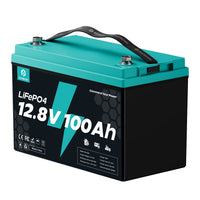
Going completely off-grid requires enough panels to cover all energy usage plus battery storage for nighttime and cloudy periods.
Off-grid requirements (monthly usage):
| Monthly kWh | 400W Panels | Battery Storage | Total Cost (After Tax Credit) |
|---|---|---|---|
| 500 | 9 | 2 batteries (27 kWh) | $22,600 |
| 1,000 | 17 | 3 batteries (40.5 kWh) | $34,400 |
| 1,500 | 26 | 5 batteries (67.5 kWh) | $53,100 |
Off-grid systems require 25-40% more panels than grid-tied installations to ensure reliable power during extended cloudy periods.
Optimizing Your EcoBoss Solar System Design
Choose the Right Panel Wattage
If you have limited or unusually shaped roof space, using fewer high-efficiency panels may be the best way to maximize long-term energy production and savings.
EcoBoss offers 400-470W premium monocrystalline panels—select based on available roof space and budget.
Account for Production Ratio
Production ratio represents estimated energy output over time (kWh) relative to actual system size (W), typically ranging from 1.1 to 1.7 in the U.S.
Higher production ratios (sunny climates) mean fewer panels needed. Lower ratios (cloudy regions) require additional capacity.
Size for Realistic Expectations
Experts recommend adding a 25% cushion to target daily energy production to ensure you generate sufficient clean energy accounting for weather variability and system inefficiencies.
Professional System Design
Modern home solar projects are planned using satellite technology that analyzes roof characteristics, local production ratios, and future energy needs.
EcoBoss certified solar professionals provide free assessments including precise panel requirements, optimal placement, and financial projections specific to your location.
Beyond Panel Count: Complete System Considerations
Inverter Capacity
Your inverter must handle total system wattage. For a typical 7,200W (18 x 400W panels) system, you need at least an 8,000W inverter to account for potential expansion and system headroom.
EcoBoss microinverter systems eliminate this concern by pairing one inverter per panel, enabling seamless future expansion.
Roof Space Calculation
Formula: Number of panels × 17.6 sq ft per panel = Total roof space required
Example: 18 panels × 17.6 = 317 square feet minimum
Add 15-20% buffer for spacing, mounting hardware, and roof obstructions.
Electrical Service Compatibility
Most residential solar requires 200-amp electrical service. Homes with older 100-amp panels may need service upgrades, adding $1,500-$3,000 to total project cost.
The Bottom Line
To determine how many solar panels you need, you'll need to know: annual electricity consumption, solar panel wattage, and estimated production ratio for your solar system.
Simple formula: (Annual kWh ÷ 365) ÷ Daily peak sun hours ÷ Panel wattage = Panels needed
For most American homes, 15-25 panels provide complete electricity offset. Your specific requirement depends primarily on consumption patterns and geographic location—not just home size.
Request a free EcoBoss solar assessment to receive a customized panel count, detailed energy production forecast, and precise financial analysis based on your exact roof configuration, local utility rates, and household energy usage patterns.
Abstract
Typical American homes require 15-21 solar panels for complete electricity offset, though actual requirements range from 8 panels (small, efficient homes) to 30+ panels (large homes with high consumption). The calculation formula—(Monthly kWh usage ÷ Monthly peak sun hours) ÷ Panel wattage—provides accurate estimates when combined with local production ratios of 1.1-1.7. Geographic location dramatically affects requirements: identical homes need 16 panels in Arizona versus 21 in Michigan due to solar irradiance differences. Modern 400-470W monocrystalline panels require 17-20 sq ft each, meaning typical 20-panel systems need 340-400 sq ft roof space. System costs average $2.50-$3.50/watt ($17,500-$24,500 for 7kW) before 30% federal tax credit. Off-grid installations require 25-40% additional panels plus battery storage (3-6 batteries for 1,000-2,000 kWh monthly usage). Professional satellite-based design optimizes panel placement, accounts for shading, and sizes systems for future electric vehicle or appliance electrification loads.


