

Silent Days on the Canals
David Chen's London flat had everything a successful software developer could want: proximity to the office, trendy coffee shops downstairs, convenient tube access. It also had everything he'd grown tired of: noise, expense, and a complete disconnect from nature.
"I'd lie awake at 2 AM hearing sirens and drunk people shouting," David recalls. "One night I thought, what am I doing? I'm 38, I can work remotely, and I'm miserable in this city. That's when I started looking at narrowboats."
Six months later, he'd sold the flat and bought a 57-foot traditional narrowboat called Serenity. The plan: become a continuous cruiser on Britain's 2,000 miles of canals while maintaining his tech career. The obstacle: power.
The Canal Boat Power Problem
Traditional narrowboat living presents unique energy challenges. Shore power exists only at marinas, which are expensive and tie you to one location. Generators work but are banned in many places and despised in others. That leaves the engine alternator, which means running a diesel engine for hours daily just to charge batteries.
"My first month, I was running the engine two hours every morning and evening," David explains. "The noise carried across the water. I felt guilty. Narrowboaters pride themselves on being quiet and respectful. Here I was, the guy with the noisy engine at 7 AM."
The calculation was simple but daunting: he needed about 2-3 kWh daily to power his laptop for work, run a 12V fridge, maintain internet connectivity, and have basic lighting. "I'm a software engineer. I can't work without reliable power. But I moved to a boat specifically for the peace and quiet. The irony wasn't lost on me."
Solar seemed like the obvious answer, except narrowboats have limited roof space, constant tree canopy shade, and unique installation challenges. "I spent months researching. Talked to dozens of boaters. Everyone had opinions. Few had solutions that actually worked for full-time living."
Building a Floating Solar System
David's research led him to ECOBOSS products, specifically their flexible solar panels and LiFePO4 batteries. "The narrowboat community has strong opinions about what works and what doesn't. ECOBOSS kept coming up in conversations with people who'd been living this life for years."
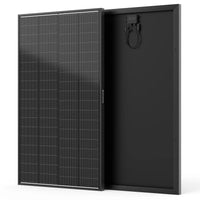
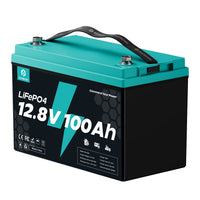
His final design used six ECOBOSS 200-watt flexible panels mounted on the cabin top and two 12V 300Ah LiFePO4 batteries in the engine room. Total capacity: 1,200 watts of solar, 7.68 kWh of storage.
The flexible panels turned out to be the better fit for my setup,” David says. “They adapt well to curved surfaces and low-profile installations, which was important for my roof. Their lightweight design puts less stress on the structure, and they handle constant movement and vibration without issues. Overall, they feel more practical and reliable for a mobile environment.
The 300Ah batteries were equally considered. "On a boat, you can't always choose your mooring. Sometimes you're in heavy shade for days. The ECOBOSS 300Ah batteries give me three days of autonomy without any solar input. That's not luxury - that's necessity for continuous cruising."
Installation took him two weeks, working methodically between software projects. "I'm not an electrician, but ECOBOSS equipment is engineered to be user-friendly. Good documentation, sensible connections, quality components. I felt confident working with it."
Seven Months on the Cut
David has now cruised over 500 miles of Britain's canal network, from London through the Midlands and up into Yorkshire. His ECOBOSS system has experienced every condition UK weather can deliver.
Summer was glorious. "June and July, I was generating 5-7 kWh daily. Batteries full by early afternoon. I could run my washing machine, charge my e-bike, use power tools for boat maintenance. It felt abundant."
But British weather is famously unpredictable, and the real test came during a September week on the Llangollen Canal. "Four consecutive days of rain. Heavy tree cover. Basically no sun at all. The panels still generated something - maybe 1 kWh daily. Combined with the battery bank, I worked all week without running the engine once. That's when I knew the system really worked."
His typical power consumption runs about 2.5 kWh daily during work weeks. Laptop for 8 hours, 4G router constantly running, the fridge 24/7, LED lighting in evenings, water pump occasionally, various USB charging. "It's modest compared to a house, but for boat life it's comprehensive. I'm not making compromises. I'm living comfortably."
The ECOBOSS batteries have particularly impressed him. "LiFePO4 was non-negotiable for marine applications. Lead-acid would have been heavier, required maintenance, and lasted maybe 500 cycles. These ECOBOSS batteries are projecting 3,000+ cycles. That's a decade of daily use."
The Quiet Life
The transformation in David's daily experience has been profound. "I wake up naturally now. No engine idling outside. No generator chugging away. Just birdsong and water against the hull. That silence was exactly what I moved onto a boat to find."
His work hasn't suffered - if anything, it's improved. "I'm more productive than I was in London. I'll moor somewhere beautiful for a week, work during the day with power I collected from the sun, then spend evenings reading by LED lights. It's a different quality of life entirely."
Other boaters notice the silence too. "The narrowboat community is incredibly friendly. But before solar, I was conscious of being the noisy guy. Now I'm just another boat. I've had dozens of conversations with curious boaters wanting to know about the system. The ECOBOSS panels are visible, and people recognize them as serious equipment."
The system's reliability has been flawless. "Seven months, zero issues. No mysterious faults, no performance degradation, nothing. In software, we'd call that 'five nines' uptime - 99.999%. For something I depend on every single day, that reliability matters enormously."
Challenges and Adaptations
David is refreshingly honest about the learning curve. "The first few weeks were an adjustment. I had to learn what 'battery at 60%' actually meant in terms of available power. I had to understand how weather affects generation. I made mistakes."
One early error: running an electric heater overnight during a cold snap. "Drained the batteries to 20% by morning. Totally my fault - I hadn't thought about the wattage. Now I use a diesel heater for space heating, which is far more efficient. The lesson cost me nothing but embarrassment."
He's also learned to adapt his work schedule to available power. "On cloudy winter days, I'll do power-intensive tasks - video calls, file uploads - during peak solar hours, usually 10 AM to 2 PM. Low-power work like coding or writing happens anytime. It's not limiting. It's just being conscious."
Tree cover remains the persistent challenge of canal cruising. "There's no avoiding it. British canals are heavily tree-lined. That's part of their charm. But it means you can't count on consistent solar input." This is where the ECOBOSS battery capacity proves essential. "Those 300Ah batteries buffer the variable input beautifully. Shade doesn't stress me because I have days of reserve."
Maintenance has been minimal but essential. "I clean the panels weekly, more often if we're under particularly messy trees. Takes five minutes. I check connections monthly. That's it. Compare that to constantly servicing an engine or generator - no contest."
The Economics Make Sense
David is pragmatic about costs. "The system wasn't cheap, but neither is marina mooring with electric hookup at £400-600 monthly. Generator fuel, maintenance, and replacement costs add up fast. Even just running the engine for charging burns through expensive diesel."
Seven months into continuous cruising, he calculates he's avoided thousands in mooring fees alone. "But honestly, the financial case isn't why I did it. Freedom is why I did it. Being able to moor in beautiful rural spots with no facilities - that's priceless. Working from a meadow-side mooring instead of a concrete marina - that's the real return on investment."
The system has also added value to the boat itself. "When I eventually sell - which won't be soon - the ECOBOSS solar system will be a major selling point. It's professional-grade equipment, properly installed. Future buyers will pay for that."
Community Impact
David's solar conversion has had ripple effects through the narrowboat community. "I've had conversations at every lock flight. Other boaters see the panels, ask questions, want to know if it really works. Three boats in my cruising network have installed solar in the past six months, all using ECOBOSS products I recommended."
He's become an informal consultant. "I don't mind. I'm enthusiastic about this lifestyle. If I can help someone else make the transition, that's rewarding. The narrowboat community helped me figure things out. I'm just paying it forward."
The environmental aspect resonates with many boaters. "Canal cruising is already a low-impact lifestyle. Adding solar makes it even more sustainable. No diesel burned for charging, no generator emissions. Just quiet, clean power from the sun. That aligns with why many people choose this life."
Looking Forward
Currently moored near Oxford, David reflects on seven months of solar-powered canal life. "This isn't camping or roughing it. This is full-time living with all the comforts I need. The ECOBOSS system made that possible."
The laptop on his desk runs on battery power collected that morning. The fridge hums quietly, maintaining perfect temperature. His phone charges on the counter. LED lights wait for evening. Everything works, reliably and silently.
"I write code for a living," David says. "I appreciate elegant engineering. The ECOBOSS solar panels and batteries are elegantly engineered. They do exactly what they're supposed to do, consistently, without fuss. That's the highest compliment I can give."
His advice to others considering the transition is simple: "If you're thinking about boat life but worried about power, stop worrying. Modern solar technology, particularly what ECOBOSS offers, makes it completely viable. I work full-time from a narrowboat. That sentence would have seemed impossible five years ago. Now it's just my normal life."
As afternoon fades, the solar panels' output gradually decreases. David barely notices. The batteries smoothly take over, as they do every evening, providing consistent power through the night. By tomorrow morning, the cycle will repeat - sunlight converted to electricity, work accomplished, life lived on his own terms.
"I sold a London flat to live on a canal boat," David smiles. "People thought I was crazy. Seven months in, with reliable power from the sun and complete freedom to go wherever the canals lead, I think I might be the sanest person I know."
The water laps gently against the hull. Inside Serenity, powered by ECOBOSS, everything is as it should be. Silent. Sustainable. Perfect.
System Details:
- 6 x ECOBOSS 200W flexible Monocrystalline Solar Panels (1,200W total)
- 2 x ECOBOSS 12V 300Ah LiFePO4 Batteries (7.68kWh storage)
- Vessel: 57-foot traditional narrowboat
- Lifestyle: Full-time continuous cruiser
- Distance traveled: 500+ miles
- Days without shore power: 210/210 (100%)
- System uptime: 100%
Follow David's continuing canal journey @SerenityNarrowboat. Proof that ECOBOSS makes off-grid boat life more than viable - it makes it wonderful.


