

When building an RV solar power system from EcoBoss, understanding each component is essential for making informed decisions. This comprehensive guide breaks down the four critical elements that work together to convert sunlight into usable electricity for your adventures on the road.
Solar Panels: Capturing the Sun's Energy
Solar panels are the foundation of any RV solar system, serving as the primary energy collectors that transform sunlight into electricity through photovoltaic technology.
Types of Solar Panels for RVs
Monocrystalline panels are recommended when space is limited and when you are willing to make a larger investment to achieve top efficiency, while polycrystalline solar panels are recommended when you want to reduce upfront costs.
Monocrystalline Solar Panels
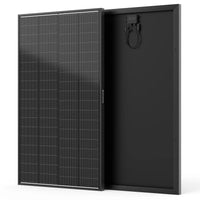
Monocrystalline solar panels have black-colored solar cells made of a single silicon crystal and usually have a higher efficiency rating. These premium panels are manufactured by growing a single silicon crystal into a cylindrical ingot, then slicing it into thin wafers.
Key Advantages:
- Monocrystalline cells have the highest efficiency typically in the 15-20% range, with some premium models reaching even higher
- Higher-efficiency solar panels are preferable if your PV system size is limited by the space available on your roof, which is especially true for RVs and applications with less space
- These black-colored solar cells have an efficiency rating between 15% and 20%
- Monocrystalline solar panels tend to be more efficient in warm weather, with performance suffering somewhat as temperature goes up, but less so than polycrystalline solar panels
- Most come with a 25-year warranty but will probably last substantially longer than 25 years
Considerations:
- They're also the most expensive, since the manufacturing process of single-crystal silicon cells is more complex
- Best choice for maximizing power output in limited roof space
Polycrystalline Solar Panels
Polycrystalline solar panels have blue-colored cells made of multiple silicon crystals melted together. These panels are created by melting multiple silicon fragments and blending them to form solar cells.
Key Advantages:
- Most polycrystalline PV cells have efficiencies between 13% to 16%, which is still a very good ratio
- These panels are often a bit less efficient but are more affordable
- More budget-friendly option for RVers with larger available roof space
- A 100-watt panel is a 100-watt panel regardless if it's a mono or poly panel
Considerations:
- Polycrystalline panels tend to have lower heat tolerance than monocrystalline solar panels and perform slightly worse in high temperatures
- Supply of polycrystalline solar panels is limited because they are a byproduct of mono panels, with the limited amount often reserved to produce smaller solar panels better suited for RVs and boats
Rigid vs. Flexible Solar Panels
Rigid Solar Panels:
- Rigid solar panels have strong anodized aluminum frames and marine grade sealants
- More durable and longer-lasting
- Flexible solar panels come with a lower lifespan in general, typically lasting between 15 to 25 years compared to the 25 to 40 years you'd expect from a rigid panel
- EcoBoss recommends rigid panels for permanent installations
Flexible Solar Panels:
- Flexible panels are typically less efficient but offer more installation versatility, though their longevity is poor and your overall investment doesn't go as far as with a rigid panel
- Suitable for curved surfaces
- We would recommend that you consider CIGS type solar panels if you were hard-set on a flexible panel, and completely avoid mono flexible style solar panels as you'll be replacing those panels in as little as 3 years
Panel Efficiency and Performance
Premium monocrystalline SunPower cells used in high-end solar panels are some of the most efficient panels available at over 23% efficiency. However, efficiency isn't the only consideration.
Performance Factors:
- The temperature coefficient indicates the efficiency loss for every degree the temperature rises
- Most monocrystalline solar cells have a temperature coefficient of around -0.3% / C to -0.5% / C
- Polycrystalline PV cells have a higher temperature coefficient than monocrystalline ones, meaning polycrystalline panels will lose more efficiency when temperature rises
EcoBoss Recommendation: For most RV applications, monocrystalline panels offer the best balance of efficiency, longevity, and performance, especially when roof space is limited.
Batteries: Storing Your Solar Energy
Batteries are the heart of your EcoBoss solar system, storing the electricity generated by your panels for use when the sun isn't shining. Choosing the right battery type significantly impacts your system's performance, weight, and longevity.
Battery Types Comparison
Lithium (LiFePO4) Batteries
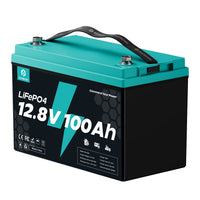
Lithium batteries use lithium iron phosphate chemistry, which is more efficient than the lead-based chemistry of other batteries.
Advantages:
- Lithium batteries can last 10 years or more with proper care, significantly longer than lead-acid and AGM options
- Lithium batteries offer a 5,000 to 10,000 cycle life when discharged up to 80 percent
- They are much lighter than lead-acid and AGM batteries and store more energy, making them easier to handle and more space efficient
- Lithium batteries weigh about one-third on average compared to AGM batteries and are often also smaller in size
- They have a deeper depth of discharge (up to 80-90 percent), so more of total capacity can be used without damaging the battery
- A lithium RV battery will provide 80% to as much as 100% of its capacity before you need to recharge it, and can recharge more quickly than a similar lead acid RV battery
- Lithium batteries charge approximately four times faster than lead-acid batteries
- Require no maintenance
- Lithium batteries have a much higher energy density, storing three to four times as much energy compared to the same size lead-acid battery
Considerations:
- The biggest drawback is high upfront cost, sometimes significantly more than lead-acid or AGM batteries
- Lithium batteries can perform poorly in extreme temperatures, especially very cold conditions, though some come with built-in temperature management systems
- They require a specifically compatible charger, which can add to the initial investment
AGM (Absorbent Glass Mat) Batteries
AGM batteries use a fiberglass mat soaked in electrolyte, making them spill-proof, maintenance-free, and more resistant to vibration—perfect for the bumps and jostles of RV travel.
Advantages:
- AGM batteries offer a maintenance-free option with better performance
- AGM batteries typically last around five to seven years
- AGM batteries might be capable of 400 to 1,000 cycles depending on their quality, maintenance, and depth of discharge
- AGM batteries can be charged faster, be discharged more deeply (up to 80%), and are resistant to off-gassing and freezing temperatures
- More affordable than lithium
- Can be used as starting batteries, while most lithium batteries cannot
Considerations:
- The depth of discharge for AGM is 50%, meaning a 100Ah AGM battery only gives you 50Ah before needing to recharge
- Although lighter than flooded lead-acid batteries, an AGM RV battery can still be heavy and bulky compared to lithium power cells
- AGM batteries need to be in a properly ventilated compartment to prevent buildup of hydrogen gas
Flooded Lead-Acid Batteries
The oldest and most common type of RV battery uses lead plates submerged in a sulfuric acid solution to create an electrochemical reaction.
Advantages:
- Usually the cheapest option upfront, making them attractive for budget-conscious owners
- Long history of reliability and performance
- Easy to find
Considerations:
- Flooded lead-acid batteries require a good bit of maintenance or they'll die on you quickly, and they last many years less than lithium batteries
- You have to regularly check fluid level, make sure they are charged properly (not overcharged), and they need periodic equalizing to clean the internal plates
- Lead-acid batteries are relatively large, heavy and typically last between three and five years, especially when subjected to deep discharges
- They emit flammable and poisonous fumes that can harm you and your environment, requiring proper outdoor air ventilation
Gel Batteries
Gel cell batteries provide electricity from a gel instead of an electrolyte solution.
Advantages:
- These batteries do not require extra ventilation or any maintenance
- They achieve a max cycle life of 1,000 cycles
- Heavier than lithium batteries but lighter than lead acid
Considerations:
- More expensive than lead acid but cheaper than lithium batteries
- Less common in RV applications
Choosing the Right Battery for Your EcoBoss System
Consider These Factors:
-
Usage Pattern: If you're living full-time in an RV and charging your batteries every single day, then you will go through lead-acid batteries much faster than lithium
-
Budget: This choice comes down to your priority: cost, longevity, performance or weight
-
Space and Weight: Depending on the energy needs of your vehicle and the number of batteries in your bank, weight can really add up, resulting in lower fuel efficiency
-
Maintenance Preference: To cut down on required maintenance, you can opt for a lithium battery
EcoBoss Recommendation: While lithium batteries have a higher upfront cost, lithium batteries are a smart investment for those who plan to boondock often or live in their RV full-time. For weekend warriors or occasional campers, AGM batteries provide excellent middle-ground performance.
Charge Controllers: Regulating Power Flow
The charge controller is the brain of your EcoBoss solar system, managing the flow of electricity from panels to batteries while protecting your investment from damage.
MPPT vs. PWM Charge Controllers
PWM (Pulse Width Modulation) Controllers
PWM controllers operate by making a direct connection from the solar array to the battery bank.
How They Work:
- They use a rapid switch that opens and closes hundreds of times per second to modulate current and maintain constant battery voltage
- Panel voltage must closely match battery voltage for optimal performance
Advantages:
- More affordable than MPPT controllers
- Simpler design with fewer components
- Adequate for small, basic systems
Best For:
- Small RV systems with one or two panels
- Situations where panels and batteries are voltage-matched
- Budget-conscious setups with minimal power demands
- Hot climate installations
MPPT (Maximum Power Point Tracking) Controllers
MPPT controllers adjust input voltage to harvest maximum power from the solar array, then convert this power to supply the varying voltage requirements of the battery.
How They Work:
- These controllers enable solar panels to operate at their maximum power point—the optimum voltage and current for maximum power output
- Continuously track and adjust to extract maximum available power
- Can handle higher voltage solar arrays
Advantages:
- MPPT controllers can provide 10-15% more charging capability compared to PWM regulators, with improvements ranging from 5-30% depending on climate conditions
- Better suited for colder conditions where solar module voltage increases
- More efficient energy conversion
- Optimal for systems with multiple panels wired in series
Best For:
- Larger EcoBoss systems powering multiple appliances
- Cold climate installations
- Situations requiring maximum efficiency
- Systems where panel voltage differs significantly from battery voltage
Key Charge Controller Functions
Regardless of type, all EcoBoss charge controllers perform these critical functions:
- Overcharge Protection: Prevents batteries from being damaged by excessive charging
- Reverse Current Prevention: Stops energy from flowing back through panels at night
- Battery Temperature Monitoring: Adjusts charging based on battery temperature
- Voltage Regulation: Manages the rate at which electricity flows into batteries
- System Monitoring: Displays current solar input, battery status, and energy harvest data
EcoBoss Recommendation: For most RV installations, MPPT controllers offer superior performance and efficiency, especially in systems with three or more panels. The additional upfront investment pays dividends through increased energy harvest and faster charging times.
Inverters: Converting Power for Your Appliances
The inverter is the final link in your EcoBoss solar system, transforming stored DC battery power into the AC electricity your appliances require.
Pure Sine Wave vs. Modified Sine Wave Inverters
Pure Sine Wave Inverters
Pure sine wave inverters are capable of producing cleaner, smoother, quieter, and more reliable electricity to operate appliances and electronics without interference.
How They Work:
- Pure sine wave inverters produce a steady, continuous wave that provides a smooth, periodic oscillation, resulting in accurate power conversion and a clean, consistent power supply
- In pure sine wave inverters, the AC power produced very closely matches an actual sine wave
Advantages:
- Pure sine power allows complex devices such as motors and microwaves to run quieter, faster and cooler
- Significantly less audible hum and noise when powering everyday electronic components such as lights, ceiling fans and TVs
- Pure sine wave inverters produce less noise and heat than modified sine wave inverters
- They are capable of powering a wide range of devices, including sensitive electronics such as laptops, smartphones, and medical equipment
- Known for their high efficiency and reliability, making them ideal for off-grid applications where stable power supply is essential
- Compatible with all modern appliances and electronics
- Inverters cost between $150 and $900
Required For:
- Laptops, computers, and tablets
- Medical equipment (CPAP machines, oxygen concentrators)
- Modern LED and LCD televisions
- Audio equipment and entertainment systems
- Microwave ovens
- Variable speed power tools
- Any device with a circuit board or microprocessor
Modified Sine Wave Inverters
In modified sine wave inverters, the polarity abruptly switches from positive to negative, creating a stair-step, square pattern where the polarity is flipped back and forth.
How They Work:
- Modified sine wave switches abruptly from positive to negative polarity
- Modified sine wave inverters convert DC power into step-shaped, almost sinusoidal AC power in a rather simple way
Advantages:
- The main benefit is that it costs less money upfront, with modified sine wave inverters typically costing between $50 and $600
- Adequate for powering basic, non-sensitive equipment
Disadvantages:
- Motors such as those in refrigerators, pumps, and fans will use more power from the inverter due to lower efficiency, with most motors using about 20% more power
- Motors will run hotter, which also means they will not last as long
- Do not work well with appliances that have an AC motor, medical equipment, and other sensitive electronics
- When used with lightbulbs, they may not glow as bright and may produce a hum
- The heat generated by modified sine wave inverters can damage electronic devices and reduce their lifespan
May Work For:
- Old tube televisions
- Basic water pumps
- Simple phone chargers
- Incandescent lights
- Basic power tools without electronic controls
Sizing Your EcoBoss Inverter
As a general rule of thumb, the size of your inverter should be similar to the DC rating of your solar panel system.
Calculation Method:
- List all appliances you'll run simultaneously
- Add up their wattage requirements
- Multiply total by 1.25 to account for surge power
- Choose an inverter rated above this calculated value
Example:
- Laptop: 65 watts
- LED lights (5): 50 watts
- Refrigerator: 150 watts
- Coffee maker: 800 watts
- Total: 1,065 watts
- Required inverter capacity: 1,065 × 1.25 = 1,331 watts
- Recommendation: 1,500-watt or 2,000-watt inverter
Inverter-Charger Combination Units
Many EcoBoss systems benefit from inverter-chargers, which combine two functions:
- Inverting: Convert DC battery power to AC for appliances
- Charging: Convert AC shore power to DC for battery charging
Inverter chargers are a great option for those living off-grid who may also connect to shore power occasionally and want to charge a battery bank.
EcoBoss Recommendation: Always choose pure sine wave inverters for RV applications. While they cost more initially, they protect your expensive electronics, reduce energy waste, and ensure all your appliances operate correctly. The cost difference is minimal compared to potential damage or inefficiency from modified sine wave inverters.
Putting It All Together: Component Compatibility
When building your EcoBoss solar system, all components must work harmoniously together:
Voltage Matching
Most RV systems operate at either:
- 12-volt systems: Most common for smaller RVs and campers
- 24-volt systems: Better for larger systems with higher power demands
- 48-volt systems: Rare in RVs, typically used in large off-grid installations
All components—panels, batteries, charge controller, and inverter—must be compatible with your system voltage.
Proper Sizing Ratios
Solar Panel to Battery Ratio:
- Solar panels should generate enough power to fully recharge batteries within 4-6 hours of peak sunlight
- Rule of thumb: 100 watts of solar per 100Ah of battery capacity for moderate use
Charge Controller Capacity:
- Must handle the total amperage from your solar array
- Add 25% safety margin above calculated maximum amperage
Inverter to Battery Ratio:
- Inverter wattage should not exceed what batteries can safely deliver
- Calculate maximum safe draw based on battery type and capacity
System Integration Example
Sample 400-Watt EcoBoss System:
- Solar Panels: Four 100-watt monocrystalline panels (400 watts total)
- Batteries: Two 100Ah lithium batteries (200Ah total, 2,560 watt-hours usable)
- Charge Controller: 30-amp MPPT controller
- Inverter: 2,000-watt pure sine wave inverter
This balanced system provides:
- Sufficient solar generation to recharge batteries daily
- Adequate battery storage for overnight power
- Proper charge regulation
- Clean AC power for all appliances
Maintenance and Care
Each component requires specific maintenance:
Solar Panels:
- Clean surfaces regularly to maintain efficiency
- Inspect connections and mounting hardware
- Check for shading from new obstructions
Batteries:
- Lithium: Minimal maintenance, monitor voltage and temperature
- AGM: Check connections, ensure proper ventilation
- Flooded lead-acid: Check fluid levels, clean terminals, equalize periodically
Charge Controllers:
- Monitor display for error messages
- Keep vents clear of debris
- Update firmware if applicable
Inverters:
- Ensure adequate ventilation
- Listen for unusual noises
- Check connections periodically
Making the Right Choice for Your RV
When selecting components for your EcoBoss solar system, consider:
- Travel Style: Weekend warrior vs. full-time boondocker
- Power Needs: Basic lighting vs. running air conditioning
- Budget: Upfront investment vs. long-term value
- Space Constraints: Available roof area and storage compartment size
- Climate: Operating temperatures in your typical destinations
- DIY vs. Professional Installation: Complexity and compatibility concerns
Final EcoBoss Recommendations:
- Solar Panels: Monocrystalline rigid panels for maximum efficiency and longevity
- Batteries: Lithium for serious RVers, AGM for budget-conscious weekend users
- Charge Controller: MPPT for systems with 300+ watts of solar
- Inverter: Always pure sine wave, sized appropriately for your maximum load
Understanding these four key components empowers you to design an EcoBoss solar system that perfectly matches your RV lifestyle. Whether you're building from scratch or upgrading an existing system, choosing quality components that work together seamlessly ensures years of reliable, renewable power for all your adventures.


