
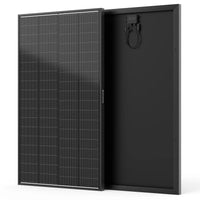
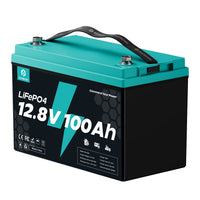

Determining your RV's power needs and sizing your EcoBoss solar system correctly is crucial for successful off-grid camping. Whether you're a weekend warrior or a full-time RVer, understanding your power consumption patterns and calculating the right solar setup will ensure you have reliable electricity wherever your adventures take you.
Understanding RV Power Basics
Before diving into calculations, it's essential to understand the fundamental concepts of RV electrical systems and how power is measured.
Key Electrical Terms Explained
A watt is a unit of measure for electric power consumption that remains constant regardless of voltage or amperage, and manufacturers will use it to rate their appliance power usage this way.
Watts (W): Instantaneous power consumption—how much power an appliance uses right now. This is the most important measurement for sizing your EcoBoss system.
Watt-Hours (Wh) or Kilowatt-Hours (kWh): Energy consumed over time. If a device uses 100 watts for 5 hours, it consumes 500 watt-hours (0.5 kWh).
Amps (A): A measurement of electrical current—how much energy an appliance is using at a given moment.
Volts (V): Electrical pressure. Most RV systems operate at 12 volts DC (battery power) or 120 volts AC (shore power/inverter power).
Converting Between Units
To convert between these measurements, use these formulas:
- Watts = Volts × Amps
- Amps = Watts ÷ Volts
- Watt-Hours = Watts × Hours of Use
Example: A 12-volt RV furnace with an amperage draw of 7 amps equals 84 watts (12 volts × 7 amps = 84 watts).
RV Shore Power Capacity: Understanding Your Limits
A 30-amp pedestal outlet can only supply 3,600 watts of power for your entire RV, compared to the 48,000 watts of power your residential service panel can supply.
Shore Power Capacities:
- 20-amp outlet: 2,400 watts
- 30-amp RV service: 3,600 watts
- 50-amp RV service: 12,000 watts (two 50-amp legs at 120 volts)
- Residential 200-amp panel: 48,000 watts
A 30-amp RV electrical system operates on 120 volts and provides a maximum of 3,600 watts of power (30 amps × 120 volts = 3,600 watts). This is sufficient for most small to mid-size RVs with careful load management, but you cannot run multiple high-draw appliances simultaneously like AC plus microwave plus electric water heater.
Understanding these limits is crucial because your EcoBoss solar system needs to match or exceed your typical power consumption to maintain battery charge during off-grid camping.
Common RV Appliance Power Consumption
Knowing how much power your appliances draw is the foundation for sizing your solar system. Here's a comprehensive breakdown of typical RV appliance consumption:
High-Draw Appliances
Air Conditioners:
- Air conditioning is by far the biggest electricity consumer in RVs, using 1,500-3,500 watts when running
- Air conditioners typically draw 12.5-16.7 amps (1,500-2,000 watts)
- An RV air conditioner that uses 10 amps (1,200 watts) while running may briefly draw 16-18 amps (1,920-2,160 watts) during startup
Microwaves:
- Microwaves use 8.3-12.5 amps (1,000-1,500 watts)
- Typically used for 5-15 minutes at a time
Electric Water Heaters:
- Electric water heaters consume about 12 amps (1,440 watts)
- Usually cycle on and off throughout the day
Space Heaters:
- Electric heaters are notoriously inefficient
- Typically consume 1,200-1,500 watts when running
- Can dramatically increase daily power consumption in cold weather
Moderate-Draw Appliances
Refrigerators:
- Refrigerators use a more modest 1.5-5 amps (180-600 watts)
- A typical RV fridge has a full load rating of 7.2A at 120V (864W) when starting up, but normally runs at about 110W
- Cycles on and off, so actual daily consumption is much lower than continuous operation
Coffee Makers:
- 800-1,200 watts during brewing
- Used for 5-10 minutes typically
Hair Dryers:
- 1,200-1,800 watts
- Usually used for 5-10 minutes
Toasters:
- 800-1,200 watts
- Brief usage periods (2-5 minutes)
Low-Draw Appliances
LED Lighting:
- LEDs use far less energy than standard bulbs—up to 75 percent less depending on the brand and type
- Typical LED bulb: 5-15 watts
- Replacing incandescent bulbs with LEDs is one of the easiest ways to reduce consumption
Laptop Computers:
- 50-75 watts while in use
- 15-30 watts while charging
Cell Phone Chargers:
- 5-10 watts per device
- Modern fast chargers: 10-18 watts
Televisions:
- LED/LCD TVs: 50-150 watts depending on size
- Older models may use more
Ceiling Fans:
- 30-75 watts
- Excellent for reducing AC needs
Water Pumps:
- 40-80 watts when running
- Cycles on demand
12-Volt DC vs 120-Volt AC Power
It's important to note that some RV appliances run on 12-volt DC power directly from batteries, while others require 120-volt AC power from an inverter:
12-Volt DC Appliances:
- LED lights
- Water pump
- Furnace blower motor
- Vent fans
- USB chargers (with DC adapters)
120-Volt AC Appliances:
- Microwave
- Coffee maker
- Hair dryer
- Laptop chargers
- Television
- Air conditioner
You can use 120-volt AC appliances from your 12-volt DC batteries by using a device called an inverter. The inverter draws power from your battery bank and converts it to household AC power, but this conversion process has some efficiency loss (typically 10-15%).
Step-by-Step: Calculating Your Daily Power Consumption
Now that you understand appliance power draw, let's calculate your actual daily consumption to properly size your EcoBoss solar system.
Step 1: Create a Comprehensive Appliance List
List all your appliances, including major appliances (AC, refrigerator, microwave, water heater), lighting, electronics (laptops, phones, tablets), entertainment devices (TV, sound system), kitchen appliances (coffee maker, toaster, blender), personal care items (hair dryer, electric shaver), and comfort devices (fans, heaters).
Step 2: Find Wattage for Each Appliance
Manufacturers will have information from their name tags on required running and starting watts. You can also:
- Check appliance labels (usually on the back or bottom)
- Search online for specifications
- Use the formula: Watts = Volts × Amps if only voltage and amperage are listed
- Buy an electricity usage monitor like Kill-a-Watt from Amazon to measure actual consumption over time
Step 3: Estimate Daily Usage Hours
For each appliance, honestly estimate how many hours per day you'll use it. Be realistic about your camping habits.
Step 4: Calculate Watt-Hours for Each Device
For each appliance: Watts × Hours = Watt-hours (Wh)
Example: A 1,500W air conditioner used for 8 hours equals 12,000 Wh (12 kWh)
Step 5: Sum Your Total Daily Consumption
Add up all the watt-hours to get your total daily power needs.
Real-World Power Consumption Examples
Let's look at several realistic scenarios to help you estimate your own needs:
Scenario 1: Minimalist Weekend Camper
Appliances and Usage:
- LED lights (30W total): 4 hours = 120 Wh
- Water pump (60W): 0.5 hours = 30 Wh
- Phone charging (10W × 2): 2 hours = 40 Wh
- Laptop (60W): 2 hours = 120 Wh
- RV refrigerator (110W average): 6 hours actual runtime = 660 Wh
- Ceiling fans (40W): 6 hours = 240 Wh
Total Daily Consumption: 1,210 Wh (approximately 101 Ah at 12V)
Scenario 2: Moderate Use Couple
Appliances and Usage:
- LED lights (50W total): 5 hours = 250 Wh
- Water pump (60W): 1 hour = 60 Wh
- Phone/tablet charging (20W): 4 hours = 80 Wh
- Laptops (120W): 4 hours = 480 Wh
- TV (100W): 3 hours = 300 Wh
- RV refrigerator (110W average): 8 hours runtime = 880 Wh
- Coffee maker (1,000W): 0.15 hours = 150 Wh
- Microwave (1,200W): 0.15 hours = 180 Wh
- Ceiling fans (60W): 8 hours = 480 Wh
Total Daily Consumption: 2,860 Wh (approximately 238 Ah at 12V)
Scenario 3: Full-Time RVers with Heavy Use
Appliances and Usage:
- LED lights (75W): 6 hours = 450 Wh
- Water pump (60W): 1.5 hours = 90 Wh
- Electronics charging (30W): 6 hours = 180 Wh
- Laptops/work devices (150W): 8 hours = 1,200 Wh
- TV/entertainment (150W): 5 hours = 750 Wh
- RV refrigerator (110W average): 10 hours runtime = 1,100 Wh
- Coffee maker (1,000W): 0.25 hours = 250 Wh
- Microwave (1,200W): 0.25 hours = 300 Wh
- Ceiling fans (80W): 10 hours = 800 Wh
- AC unit (1,500W): 6 hours = 9,000 Wh (seasonal)
- Furnace blower (84W): 4 hours = 336 Wh (seasonal)
Total Daily Consumption (No AC): 5,456 Wh (455 Ah at 12V) Total with AC: 14,456 Wh (1,205 Ah at 12V)
Average RV electricity consumption of 20 kWh per day is confirmed by multiple sources for full-time living with climate control.
Important Seasonal Considerations
Temperature control with electric power is notoriously power hungry, and there is a strong seasonal component involved in estimating how much power you need.
Your power consumption can vary dramatically based on weather:
- Summer: Air conditioning can double or triple your base consumption
- Winter: Electric heating significantly increases power needs
- Spring/Fall: Mild temperatures allow minimum power consumption
Costs vary significantly based on climate, with summer AC usage potentially doubling or tripling bills.
Sizing Your EcoBoss Battery Bank
Once you know your daily consumption, you can size your battery bank appropriately.
Battery Capacity Fundamentals
A "100 amp-hour battery" would be the same as a 1200 watt-hour battery (100 amps × 12 volts = 1200 watts).
Formula: Amp-Hours × Voltage = Watt-Hours
Depth of Discharge Considerations
You should only use about 50% of your lead acid or AGM batteries before they can become damaged.
The major benefit to the more expensive lithium batteries is that you can use 100% of the listed storage capacity without damaging them, whereas if you discharge more than 50% of a lead acid battery's capacity more than a few times, the lifespan of the battery will decrease dramatically.
This means:
- Lead-Acid/AGM: Need 2× your daily consumption
- Lithium: Need 1× your daily consumption (plus buffer)
Days of Autonomy
How many days at a time do you spend off-grid? Do you need a lot of energy at night when the solar panels are not generating any power?
Most EcoBoss systems are designed for 1-2 days of autonomy, meaning your batteries can power your RV for 1-2 days without any solar input.
Formula: Battery Bank Size = Daily Consumption × Days of Autonomy × Safety Factor
Battery Bank Sizing Examples
Example 1: Minimalist Weekend Camper
- Daily consumption: 1,210 Wh (101 Ah)
- Battery type: Lithium
- Days of autonomy: 1
- Required capacity: 101 Ah × 1.2 safety factor = 121 Ah
- EcoBoss recommendation: One 100-135 Ah lithium battery
Example 2: Moderate Use Couple
- Daily consumption: 2,860 Wh (238 Ah)
- Battery type: Lithium
- Days of autonomy: 1.5
- Required capacity: 238 × 1.5 × 1.2 = 429 Ah
- EcoBoss recommendation: Two 200 Ah lithium batteries (400 Ah total)
Example 3: Full-Timers Without AC
- Daily consumption: 5,456 Wh (455 Ah)
- Battery type: Lithium
- Days of autonomy: 2
- Required capacity: 455 × 2 × 1.2 = 1,092 Ah
- EcoBoss recommendation: Four 270 Ah lithium batteries or combination totaling ~1,000-1,200 Ah
Peak Power Considerations
It is important to also consider the continuous and peak discharge current your battery is capable of handling.
Peak power demand is the maximum amount of power your system will need to supply at any given moment, which typically occurs when you turn on multiple devices at once, such as when you start your air conditioner or microwave.
Calculate peak demand: Add the wattage of all appliances you might run simultaneously.
Summing the total watts and dividing by the voltage of your battery will return current in amps if all appliances were in use at the same time.
Example: Running microwave (1,200W), refrigerator (110W), and lights (50W) simultaneously:
- Total: 1,360 watts
- Current draw: 1,360W ÷ 12.8V = 106 amps
Ensure your battery bank can handle this continuous discharge rate.
Sizing Your EcoBoss Solar Panel Array
Now that you know your daily consumption and battery bank size, you can calculate how many solar panels you need.
Solar Panel Output Reality
Panel watt ratings are based on maximum efficiency, but the temperature, weather, and time of day all affect how much power solar panels can generate.
You will generate about 30 amp-hours of power for every 100 watts of solar panels you have in ideal conditions, which you can use as a general guideline while panel shopping.
A 100 watt solar panel sitting flat on the roof will yield about 30AH of 12v battery charging, which equates to 360Wh.
Conservative Rule of Thumb:
- 100-watt panel = 30 Ah (360 Wh) per day
- 200-watt panel = 60 Ah (720 Wh) per day
- 300-watt panel = 90 Ah (1,080 Wh) per day
- 400-watt panel = 120 Ah (1,440 Wh) per day
Calculating Required Solar Capacity
Basic Formula: Solar Watts Needed = (Daily Wh Consumption ÷ 360 Wh per 100W panel) × 100
To replenish the energy used—for example, 139.1 amp-hours—you would need an array of panels totaling 500 watts, calculated from the guideline that each 100-watt panel will produce about 30 amp-hours per day in ideal conditions.
Although this would cover the minimum daily necessary, it's a good idea to oversize your array by 20-25 percent capacity above your requirements to ensure you're not left short on a cloudy day or if you use more than expected.
Solar Sizing Examples
Example 1: Minimalist Weekend Camper
- Daily consumption: 1,210 Wh
- Base solar needed: 1,210 ÷ 360 = 3.36 × 100 = 336 watts
- With 25% buffer: 336 × 1.25 = 420 watts
- EcoBoss recommendation: 400 watts (four 100W panels or two 200W panels)
Example 2: Moderate Use Couple
- Daily consumption: 2,860 Wh
- Base solar needed: 2,860 ÷ 360 = 7.94 × 100 = 794 watts
- With 25% buffer: 794 × 1.25 = 993 watts
- EcoBoss recommendation: 1,000 watts (ten 100W panels or five 200W panels)
Example 3: Full-Timers Without AC
- Daily consumption: 5,456 Wh
- Base solar needed: 5,456 ÷ 360 = 15.16 × 100 = 1,516 watts
- With 25% buffer: 1,516 × 1.25 = 1,895 watts
- EcoBoss recommendation: 1,800-2,000 watts of solar
Solar Panel Size by RV Length
Here's a general sizing chart by RV size: 10-14 foot RVs need 100 watts of solar with one 100Ah battery; 15-20 foot RVs need 100-200 watts with one 100-135Ah battery; 21-30 foot RVs need 200 watts with two batteries; 31-40 foot RVs need 400 watts with larger battery banks; and 40+ foot RVs need 600 watts or more.
Practical Solar Recommendations
200 watts of solar is the bare minimum to keep a battery bank topped off while your RV is not in use, but if you're using your RV you will need more.
For toy haulers with moderate usage, a 700-watt solar package produces great results, and this seems to be the sweet spot for many RVers with small inverter use.
The most conservative boondockers will want at least 200 watts of solar panels, the average is 400-700 watts, and power-hungry boondockers will have north of 800 watts of solar panels.
Running Air Conditioning on Solar
Running AC from solar is one of the most challenging scenarios:
If your residential fridge uses 6A at 120v it will consume 720 watts when running; if it runs for 1/4 of the day it will consume 4,320Wh or 360AH, requiring 1,000 watts of solar panels.
For a 1,500-watt AC unit running 8 hours:
- Daily consumption: 12,000 Wh (1,000 Ah at 12V)
- Solar needed: 3,333 watts minimum
- Plus 25% buffer: 4,167 watts
This exceeds what most RV roofs can accommodate, making AC usage difficult without supplemental power sources.
Optimizing Your EcoBoss System
Roof Space Limitations
Solar panels aren't small, and RV roofs aren't very big, so if you are roof-mounting your panels, take careful measurements and cross-reference with the dimensions of any potential panels.
RVs and vans tend to have multiple small solar panels instead of a single big solar panel because the roof tends to have vents, like a kitchen vent, or an air conditioner, or a fan or skylight that makes it hard to install a single large panel.
For some heavy electricity users, it's possible you may not have enough space on your RV's roof to generate the power you need, and in this case you will need to look into supplementing your roof-mounted panels with other power sources or growing your battery bank to store more energy.
Portable vs. Roof-Mounted Panels
Portable systems offer more flexibility, allowing you to maximize your sun exposure even if you park your RV in the shade, but you'll need to assemble and disassemble them every time you change campsites.
When starting to boondock before you know your solar needs, it is easy to start with solar panels on the ground to try them flat, then track the sun with them to get an idea of the difference in output where and when you boondock.
Solar Panel Tilting Benefits
Tilting and tracking panels during winter can almost double the output of a flat solar panel, which can be attributed to short days and not much direct sun reaching the flat panel.
Charge Controller Sizing
A 30-amp solar charger is sufficient if you have around 400 watts of solar or less.
The charge controller must handle the total amperage from your solar array. Calculate maximum current:
Formula: (Total Solar Watts × 1.25) ÷ Battery Voltage = Required Controller Amps
Example: 600W solar array with 12V batteries: (600 × 1.25) ÷ 12 = 62.5 amps Required: 60-amp or larger controller
If you want to go to a 40-amp, 50-amp or 60-amp solar charger because you think you'll eventually have 500 watts or more of solar, then buy that size the first go around.
Inverter Sizing
Your inverter must handle your peak AC power demand. Calculate your peak power demand by simply adding up the wattage of all the devices you plan to use simultaneously.
Multiply by 1.25-1.5 for safety margin and surge capacity.
Reducing Your Power Consumption
Before investing in a large EcoBoss system, consider these strategies to reduce consumption:
Energy-Saving Strategies
Replace traditional incandescent bulbs with LED alternatives that use up to 90% less energy while providing equivalent illumination.
Use window coverings, awnings, and ventilation strategically to reduce air conditioning needs during hot weather and maintain comfortable temperatures naturally.
Install and use ceiling fans that consume minimal power while significantly improving comfort by circulating air throughout your RV living space.
Take shorter showers and consider using campground facilities when available to reduce electric water heater usage and conserve power.
Unplug devices when not in use since many draw "phantom power" even when turned off, or use power strips with on/off switches to completely cut power.
Use your RV's alternator to charge devices while driving to reduce power needs when you arrive at camp.
If you already have LEDs in your RV, consider putting in a dimmer switch—for example, LEDs on full power use about 2 amps per hour, but if turned down to a couple notches above the lowest setting they only pull about 0.2 amps per hour, meaning they would last 10 times as long on the same battery while being dimmed.
The largest power-hungry appliances are those that heat or cool—things like air conditioning units, microwaves, or electric space heaters really draw serious power, and not running those devices can drastically help conserve energy.
Simple strategies like upgrading to LED lighting, using energy-efficient appliances, and smart scheduling of high-draw devices can reduce your consumption by 25-50% without sacrificing comfort.
Monitoring Your Usage
Buy and install a battery monitor to track your actual power usage, as estimating can be difficult for things like lights.
For example, your battery monitor tells you that over 24 hours you used 135 amp-hours from your lithium battery bank, which works out to be about 1,755 watt-hours (135 amp-hours × 13 volts = 1,755 watt-hours).
Alternatively, you could do the same test while connected to shore power using a power monitor like the Watchdog surge protector to tell you your watt-hour consumption over a 24-hour or longer period.
Parasitic Loads
You'll also find that you might have a handful of devices that are off but still plugged in and drawing power—these parasitic draws might not look like much, but over the course of 24 hours they can really add up, especially on smaller systems.
If you leave an inverter on all day there will be a no-load draw of approximately 25 watts per hour or 600Wh a day, which needs to be calculated into the equations.
Balancing System Components
A big misconception with RV solar is that you need 500, 600, or 900 watts of solar for it to be worth it—the reality is you only need as many panels as your batteries can store and your usage warrants.
It doesn't matter how many panels you have if you don't have the battery bank to store the energy your panels are pulling in—that's why many choose a lower amount of panels, since their batteries are reading as full when they have optimal sun.
The system has to work together, and there's no point spending money when you aren't able to reap the benefits.
Key Balance Points:
-
Start with batteries: Invest in your batteries as they are the powerhouse of the entire RV solar setup, and you can always add more panels later if you find you would like more energy
-
Match solar to usage: Size panels to recharge batteries within 4-6 hours of peak sun
-
Don't overbuild: If batteries are consistently full by early afternoon, you don't need more solar
-
Plan for expansion: Leave room for adding panels as your needs grow
Quick Reference: EcoBoss System Recommendations
Light Use (Lights, Phone Charging, Small Devices)
- Daily consumption: 800-1,500 Wh
- Battery bank: 100-200 Ah lithium
- Solar panels: 200-400 watts
- Charge controller: 20-30 amp MPPT
- Inverter: 1,000-1,500 watts pure sine wave
Medium Use (Above Plus Laptop, TV, Microwave)
- Daily consumption: 2,000-3,500 Wh
- Battery bank: 300-400 Ah lithium
- Solar panels: 600-800 watts
- Charge controller: 40-50 amp MPPT
- Inverter: 2,000-3,000 watts pure sine wave
Heavy Use (Full-Time Living, No AC)
- Daily consumption: 4,000-6,000 Wh
- Battery bank: 600-800 Ah lithium
- Solar panels: 1,000-1,500 watts
- Charge controller: 60-80 amp MPPT
- Inverter: 3,000 watts pure sine wave
Extreme Use (Full-Time, Occasional AC)
- Daily consumption: 8,000-15,000 Wh
- Battery bank: 1,000+ Ah lithium
- Solar panels: 1,800-2,400+ watts
- Charge controller: Multiple controllers
- Inverter: 3,000+ watts pure sine wave
Final Considerations
Understanding your power consumption and properly sizing your EcoBoss solar system is a balance between:
- Your camping style: Weekend vs. full-time
- Your comfort expectations: Minimalist vs. all amenities
- Your budget: Initial investment vs. long-term value
- Your RV's physical constraints: Roof space and weight capacity
- Your typical destinations: Sunny desert vs. shaded forest
Whether you're a weekend warrior or a full-time RVer, taking control of your electricity usage will enhance your camping experience and keep your energy costs manageable.
Start by monitoring your current usage, identify your biggest power consumers, and implement the management strategies that work best for your camping style and budget.
With careful planning and the right EcoBoss components, you can achieve the energy independence needed to camp anywhere your adventures lead, confident that you'll have the power you need when you need it.


